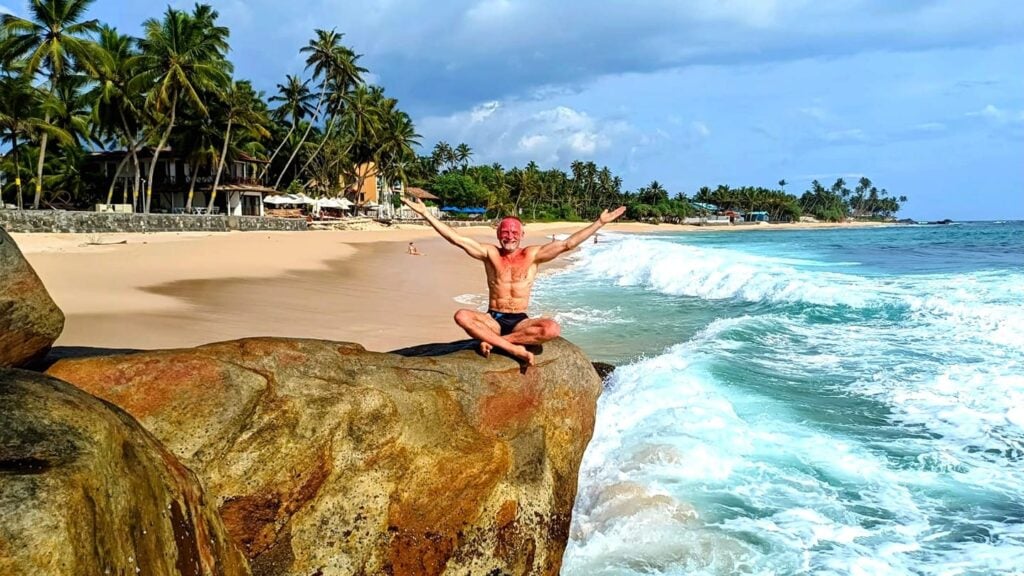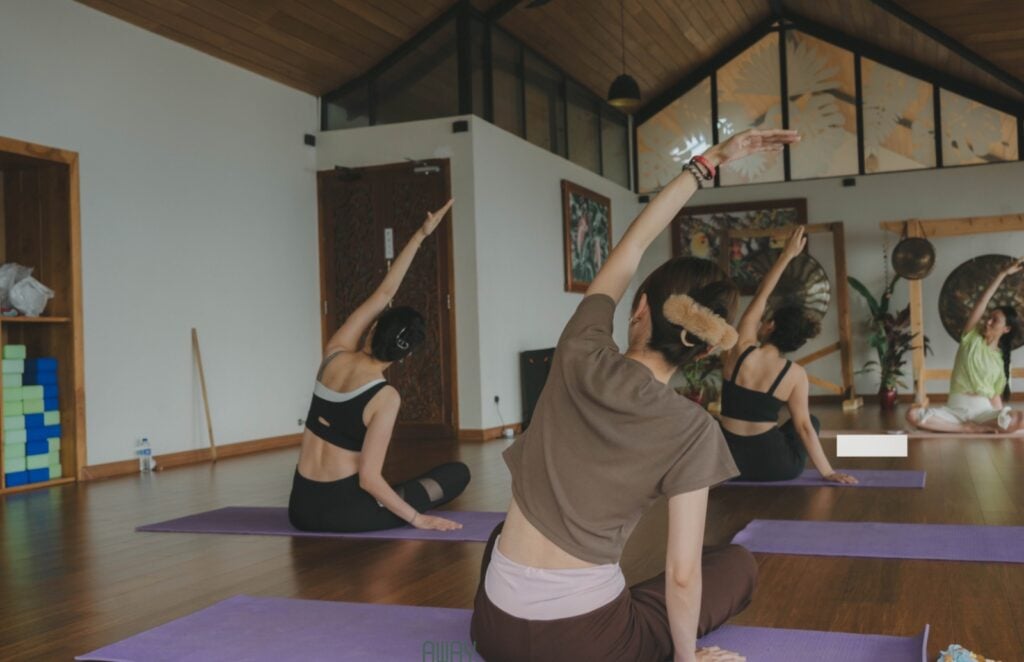
When people ask me “what is a retreat?”, I’d love to take them to our glass-fronted Sati Hall at dawn, when the mist rises from the valley and the first birds begin to sing. For more than twenty years I created one of Central Europe’s largest cultural festivals and lived in constant motion. It was only when I encountered Buddhist meditation and Ayurveda that I realized vitality isn’t about performance but about balance. And a retreat is exactly the time when you can find that balance again.
A retreat is a set period away from everyday life with a clear theme, a daily program and a guide. The theme might be yoga, meditation, Ayurveda, movement or bodywork. Unlike a holiday, you come home with a practice, not just a rest. To choose the right one, look at the teacher, your goal, the group size, the daily rhythm and what’s included in the price.
In this article
- What is a retreat? Where the word comes from
- Retreat, holiday or wellness break?
- Types of retreat: yoga, silence, Ayurveda and more
- What a day on retreat looks like
- How to choose a retreat: 9 questions to ask before you book
- Red flags: when to be cautious
- How much does a retreat cost?
- How to prepare for a retreat
- A retreat close to home or abroad?
- Sources
What is a retreat? Where the word comes from
The English word “retreat” came via Old French (retret, retrait) from the Latin retractus, “drawn back”. Its basic meanings are a withdrawal and a quiet place of refuge. Dictionaries also list the sense we’re interested in here: a period of seclusion or solitude, devoted mainly to meditation, prayer or study.
Today the word is used loosely. A hotel or spa may call itself a “retreat” simply because it’s quiet and secluded, and companies hold “retreats” that are really strategy days away from the office. What makes something a retreat in the sense of this article is the program, not the sign over the door.
Older than you might think: Ignatian retreats and the rains retreat
In Christianity, the modern retreat was shaped by Ignatius of Loyola, founder of the Jesuits, through his Spiritual Exercises, written between 1522 and 1524. In their original form they make up a retreat of about 30 days in silence and solitude. Most retreat houses today offer shorter retreats built on elements of the Exercises, and in 1922 Pope Pius XI named Ignatius the patron saint of spiritual retreats.
Buddhism has vassa, the three-month rains retreat of monks, observed above all by Theravada Buddhists – including those in Sri Lanka. In Zen, retreats are called sesshin. The modern retreat borrows its backbone from these traditions: silence, regular practice and guidance. And it offers that backbone to people with no religious framework, too.

Retreat, holiday or wellness break?
You’ll rest in all three. But they differ in their purpose and in what you bring home.
| Holiday | Wellness break | Retreat | |
|---|---|---|---|
| Purpose | rest, experiences | regeneration and body care | inner work, new habits and skills |
| Program | free, up to you | treatments of your choice | a set daily rhythm |
| Guidance | none, or a tour guide | a therapist for each treatment | a teacher or team of teachers throughout |
| People around you | family, friends, other guests | other guests | a group with the same intention |
| Typical length | one to two weeks | a weekend to a week | a weekend to two weeks |
| What you take home | memories and rest | a relaxed body | a practice you can repeat at home |
The lines aren’t sharp: a “wellness retreat” can be a hotel package with a massage or a stay with a real program. The deciding question is whether there’s a teacher and a program, or just a menu of services.
Why the difference matters
A meta-analysis of seven studies suggests that holidays have a small positive effect on health and well-being, but that it fades soon after people return to work (de Bloom et al., 2009). A smaller randomized study sent 64 healthy women with no meditation experience to a resort for six days: some simply relaxed, while others learned to meditate.
Straight after the stay, well-being improved in roughly the same way for everyone. But at follow-ups one and ten months later, the women who had learned to meditate had held on to lower levels of distress more successfully (Epel et al., 2016). The study was small and included only women, yet the difference makes sense to me: a holiday gives you a breather, while a good retreat also gives you a tool you can take home.
My tip: Pick just one practice from your retreat – five minutes of breathing or a morning cup of tea in silence – and do it every day at home. One small thing that lasts is worth more than ten big resolutions.
Group retreat or individual program?
At Yasmin Hill you’ll find both formats: group retreats on fixed dates and individual Ayurvedic programs of 3 to 21 days. You do an individual program without a group, on dates you choose, and it includes accommodation, meals, treatments and consultations with an Ayurvedic doctor. Choose a retreat when you want inspiration, guidance and community, and an individual program when you need targeted care. One practical point: this season’s group retreats are held in Czech, so if you don’t speak Czech, an individual program is the better fit.
Types of retreat: yoga, silence, Ayurveda and more
More than twenty retreats take place at Yasmin Hill every year, and each has its own atmosphere – that’s what makes them so lovely. Most combine several approaches, but one theme usually leads.
| Type of retreat | Who it suits | What to expect |
|---|---|---|
| Yoga | beginners and experienced practitioners who want a regular practice | yoga morning and evening, breathwork, relaxation |
| Meditation and silent | people with at least some meditation experience | hours of sitting, silence, minimal stimulation |
| Ayurveda and detox | anyone who wants to give their digestion, sleep and nerves a rest | consultations, treatments, light food |
| Women’s | women looking for a safe space among women | sharing circles, gentle movement, body care |
| Leadership and burnout | managers, founders, people running on empty | coaching, recovery, bodywork |
| Movement and qigong | anyone who needs to get out of their head and back into their body | daily practice, breathwork, time outdoors |
| Holiday and New Year | people who want to see out the year differently | rituals, celebrations, often more than one location |
| Therapeutic and somatic | people who want to work with tension held in the body | therapy, bodywork, sharing |
Yoga retreat
Probably the most common type: the day begins and ends with yoga, with time in between for meals, rest and excursions. If you’re a beginner, look for a yoga retreat for all levels, where the teacher offers modifications of the poses. Experienced practitioners will appreciate a stay focused on a single style or on breathwork.
Meditation and silent retreat
The heart of a meditation retreat is sitting and silence. Classic vipassana courses usually last ten days, but there are weekend formats too. People stay silent at meals and between sessions, and phones are often handed in.
A 2020 systematic review of 83 studies concluded that unwanted effects during or after meditation, most often anxiety and depression, are not rare. Overall they occurred in 8.3% of participants (though rates varied widely between types of study), and they can affect people with no previous mental health problems (Farias et al., 2020). If you’re going through a crisis or being treated for depression or anxiety, talk to your therapist first and start with a shorter format.
Ayurveda and detox retreat
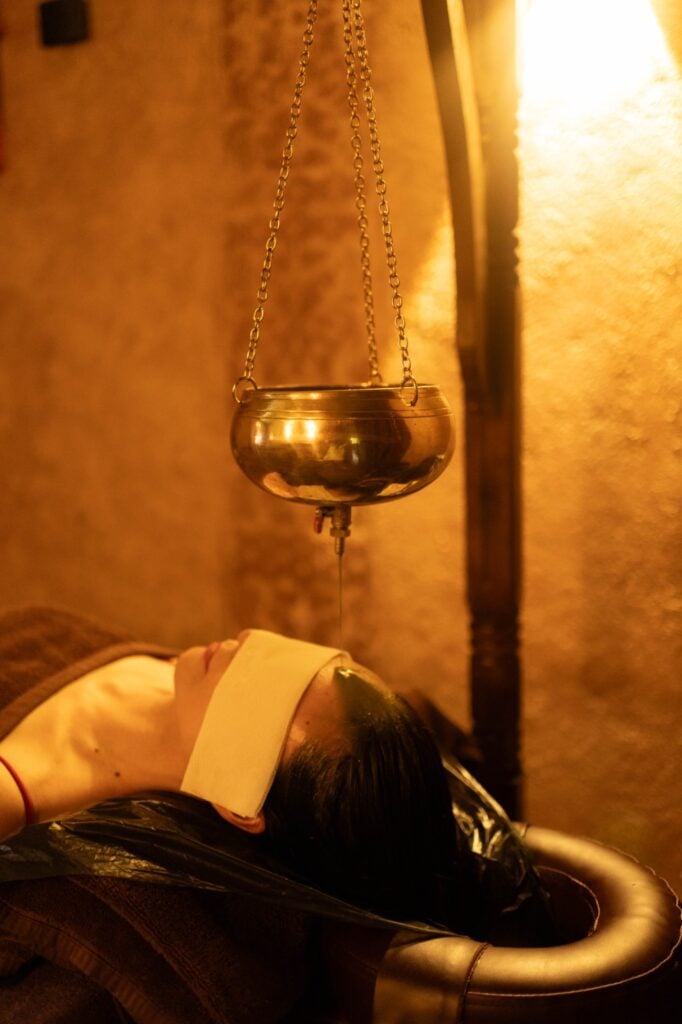
This combines a group program with Ayurvedic care: a consultation with a doctor, treatments such as abhyanga or shirodhara, and light food suited to your constitution. Ayurveda has a long tradition in Sri Lanka. Take the word “detox” with a pinch of salt – an honest stay doesn’t promise to flush out every toxin, but to give your digestion, sleep and nerves some peace.
A deeper cleanse, Panchakarma, is better done as an individual program, because it needs preparation, medical supervision and time – our guide to Panchakarma explains why. Our February and March retreats also combine Ayurveda with another main theme; the amount of care included varies, so check it on each retreat’s page. And if you’re weighing up a stay focused purely on Ayurveda, read how to choose an Ayurveda retreat in Sri Lanka and what it costs.
Women’s retreat
Women’s retreats rely on a group in which it’s easier to talk – about tiredness, your cycle, menopause, or how not to lose yourself in five roles at once. The program tends to be gentler: movement, breathwork, sharing circles and body care. Choose above all by the teacher and her approach. If you’d rather have targeted care than a group, our 10-day individual Ayurvedic program for women is an alternative.
Leadership and burnout retreat
For people who have been carrying a company, a team or a family for a long time and are running on reserves. Besides recovery, there’s room for coaching and for looking at your own work from the outside. This theme is very close to my heart, because I know where years at full speed can lead.
One example is Leadership Recharge (1–14 March 2027). It’s led by coach Marian Jelínek, who has more than 35 years of experience and was, among other things, personal coach to ice hockey legend Jaromír Jágr, together with film director and polar explorer Petr Horký and somatic coach Tereza Winklerová. The price includes consultations with an Ayurvedic doctor and daily therapies, and the retreat is held in Czech. Established burnout or depression, however, belongs in the care of a doctor or psychologist – a retreat is no substitute for treatment.
Movement and qigong retreat
For people who spend their days in their heads and need to come back into their bodies: qigong, walking, breathwork, time in nature. On Awaken Your Inner Qi, our Zhineng Qigong and Ayurveda retreat (1–13 February 2027), the practice is led by Master Liu Jianshe, who has worked with qi for 38 years and is a direct student of Dr. Pang Ming. He is joined by craniosacral therapist Vladislav Horecký and breathwork instructor Lenka Melicharová. The retreat is held in Czech.
Holiday and New Year retreat
There are other ways to see in the New Year than fireworks. New Year’s Conscious Awakening (27 December 2026 – 10 January 2027) is led by Joska Šálek, world-record holder for the fastest barefoot half marathon on snow and ice. The group spends fourteen nights between our hills at Yasmin Hill and the ocean. The program is held in Czech and includes a New Year’s Eve feast, a Ganesha ceremony and a fire ritual with a walk over hot coals. You’ll find more ideas in our article on a New Year’s retreat in Sri Lanka.
Therapeutic and somatic retreat
The somatic approach starts from the idea that stress and tension are stored in the body as well as the mind. It works with touch, breath, movement and body awareness. One example is The Rhythm Within, our craniosacral and Ayurveda retreat (15–28 February 2027). Craniosacral osteopath Radek Neškrabal, BCST, has worked in holistic health since 1987 and trains therapists; Tereza Winklerová teaches embodiment, and Lenka Melicharová leads breathwork and council circles. It’s held in Czech. A therapeutic retreat is not psychotherapy, though – if you’re in treatment, tell your therapist about your plans.
Retreats in Sri Lanka, 2026/27 season
Qigong, craniosacral therapy, a retreat for leaders and a New Year reset – all held in Czech. See the dates, programs and prices.
What a day on retreat looks like
Every retreat has its own rhythm, but the structure is usually similar. This is how a day might look on a retreat that combines movement, Ayurveda and group work:
- Morning: waking up without your phone, a glass of warm water and the first practice – yoga, qigong or meditation.
- Mid-morning: breakfast and the main block of the program – a class, a talk or work in pairs.
- Midday: the main meal of the day. Ayurveda traditionally recommends eating most at noon, when digestion is strongest.
- Afternoon: free time, treatments, a walk, the pool or a nap.
- Early evening: a second block – movement, breathwork or a sharing circle.
- Evening: a light dinner, a short meditation and an early night.
A good program leaves room for free time, too. If the day is packed from six in the morning until ten at night, the retreat becomes yet another performance. If free time dominates, it’s more of a holiday with a yoga class. My own favorite time is the afternoon, when everything slows down and eagles circle overhead.
How to choose a retreat: 9 questions to ask before you book
Before you pay a deposit, go through these points. Anything you can’t find in the description, the organizer should be able to answer by email.
- The teacher and their experience. How long have they worked in the field? Who did they learn from? Do they lead groups regularly? Look for specific names, years and results, not just “certified guide”.
- Program and free time. How many hours a day are guided, and what is optional? For a first retreat, choose a balanced rhythm.
- Group size. How many people are going, and how many teachers look after them? Our February and March retreats are capped at 30 places, and each is led by three teachers.
- Language. Understanding the teacher fully is essential, especially for meditation and bodywork. Is the program in your language, or interpreted? Our current retreats, for example, are held in Czech.
- What’s included. Accommodation, how many meals a day, treatments, transfers, excursions, flights? Over two weeks, the difference between full board and breakfast only can easily run to hundreds of dollars.
- Location and climate. Mountains, sea or forest? And how long is the journey from the airport? From Colombo airport to our hills above Kandy, it’s about 3–3.5 hours by car.
- Accommodation and food. A private or shared room? Is it quiet at night? Where does the food come from, and can the kitchen cater for allergies?
- Payments and cancellation. How big is the deposit, when is the balance due and what happens if you fall ill? Consider travel insurance with cancellation cover, and find out who your contract is with – the program organizer, the resort or an agency.
- Reviews and references. Look for experiences with the specific teacher and place, not just star ratings.
My tip: Before you sign up, write to the organizer and ask about what really matters to you – for example, what your first day will look like. I find the way they answer tells you more about a retreat than any brochure.
Red flags: when to be cautious
This part matters a lot to me, because signing up for a retreat is an act of trust.
- A promise of a cure. “Beat burnout in a week.” An honest retreat talks about support, not miracles.
- A vague program. “We’ll open up and let things flow” is not a program.
- Pressure to decide fast. “Last two places, price valid until midnight” – again and again, with no specifics.
- Intensive techniques without a health questionnaire. Long breathwork sessions, fasting, cold exposure or psychoactive substances with no questions about your health and no experienced person on hand.
- Advice to stop your medication. Only your own doctor should advise you to stop a treatment.
- Unclear payments. A transfer to a private account with no contract, terms and conditions or cancellation policy.
How much does a retreat cost?
The price depends on the length, the teachers, the accommodation, the food and the services included. A weekend retreat close to home is usually the most affordable way to try one. A week or two abroad with accommodation, full board and a program costs considerably more, and flights come on top. To give you an idea, here are our group retreats for the 2026/27 season:
| Retreat | Dates | Length | Price | Per night (approx.) | Included |
|---|---|---|---|---|---|
| New Year’s Conscious Awakening | 27 Dec 2026 – 10 Jan 2027 | 14 nights | approx. USD 2,120 | approx. USD 140 | accommodation in the hills and by the sea, full board in the hills and half board by the sea, transfers, Czech-speaking guide, program |
| Awaken Your Inner Qi (Zhineng Qigong & Ayurveda) | 1–13 Feb 2027 | 12 nights | USD 2,150 | approx. USD 180 | accommodation, organic full board, program, Kangen water |
| The Rhythm Within (craniosacral therapy & Ayurveda) | 15–28 Feb 2027 | 13 nights | USD 2,100 | approx. USD 160 | accommodation, organic full board, program, transfers, Kangen water |
| Leadership Recharge | 1–14 Mar 2027 | 13 nights | USD 4,300 | approx. USD 330 | accommodation, organic full board, program, consultations with an Ayurvedic doctor, daily therapies, transfers, Kangen water |
Add your flight to the price – it isn’t included in any of our retreats. For the New Year retreat, registration is handled by our partner organizer; you’ll find the details on the retreat’s page. For comparison, our individual program The Metabolic Kickstart (7 days / 6 nights) starts at USD 1,284 and the 14-day standard Panchakarma at USD 2,600 in a shared room (prices as of October 2026). Programs include accommodation, meals, treatments and doctor consultations, and you choose the dates yourself.
When you compare offers, work out the price per night and add whatever is missing. A retreat for USD 1,300 without meals or transfers can end up costing more than one for USD 1,900 where everything is included.
How to prepare for a retreat
- A month before: set your intention. Write down in one sentence why you’re going and what you want to bring home.
- Health. If you take medication, have a chronic condition, are pregnant or are being treated for a mental health condition, discuss your plans with your doctor. Fill in the organizer’s health questionnaire honestly.
- Documents. For Sri Lanka, according to GOV.UK, your passport must be valid for at least six months after arrival, and you need an Electronic Travel Authorization (ETA) arranged in advance on eta.gov.lk. Since 25 May 2026 it has been free for tourists from 40 countries, including the UK, the US, Germany, France and the Netherlands (but not Ireland), and it is valid for 30 days. Check the rules again shortly before you travel.
- Two weeks before. Gradually cut down on coffee, alcohol and sugar. Don’t bring a caffeine-withdrawal headache to your retreat.
- A week before. Arrange cover at work and set up an out-of-office reply.
- After you return. Keep your first days light. That’s when it’s decided whether the effect lasts.
What to pack
- comfortable clothes for practice that you can layer, plus a sweater for mornings and evenings
- light long trousers or a skirt and tops that cover your shoulders – for evenings and for visiting temples
- a scarf, a hat, sunglasses, sunscreen and insect repellent
- sandals and sturdier shoes for walks
- a water bottle, a notebook and a pen
- your own medicines with a few days’ extra supply, and a list of them with their generic names
- earplugs, an eye mask and a universal travel adaptor
You usually don’t need to bring a yoga mat, but check with the organizer. And leave your laptop at home if you possibly can.
My tip: I’d always pack one old, comfortable outfit that doesn’t mind a bit of oil. After an Ayurvedic massage you can slip into it without worrying about stains.
A retreat close to home or abroad?
Both make sense; it depends on what you’re looking for.
A retreat close to home
- Pros: shorter and cheaper, with no long-haul flight, jet lag or long journey. Even a weekend makes sense, and you can keep working with the teacher afterwards.
- Cons: it’s harder to switch off close to home, when work is just a phone call away. And in winter there’s no sun or warmth waiting for you.
A retreat abroad
- Pros: the distance itself helps you switch off. In winter you get warmth and light while it’s dark at home. And you experience a tradition like Ayurveda where it belongs.
- Cons: the flight, the long journey and the time difference – in winter Sri Lanka is 5.5 hours ahead of the UK and 4.5 hours ahead of Central Europe. The first day or two go on acclimatizing, so a stay of ten to fourteen nights is worth more than a short one. And flying has its carbon footprint.
If you’ve never been on a retreat, a weekend closer to home will show you whether a group rhythm suits you. If you already know you want to go deeper and winter wears you down, two weeks in the warmth will give you more than three weekends in a row. Our guide to the best time to visit Sri Lanka will help you pick the month.
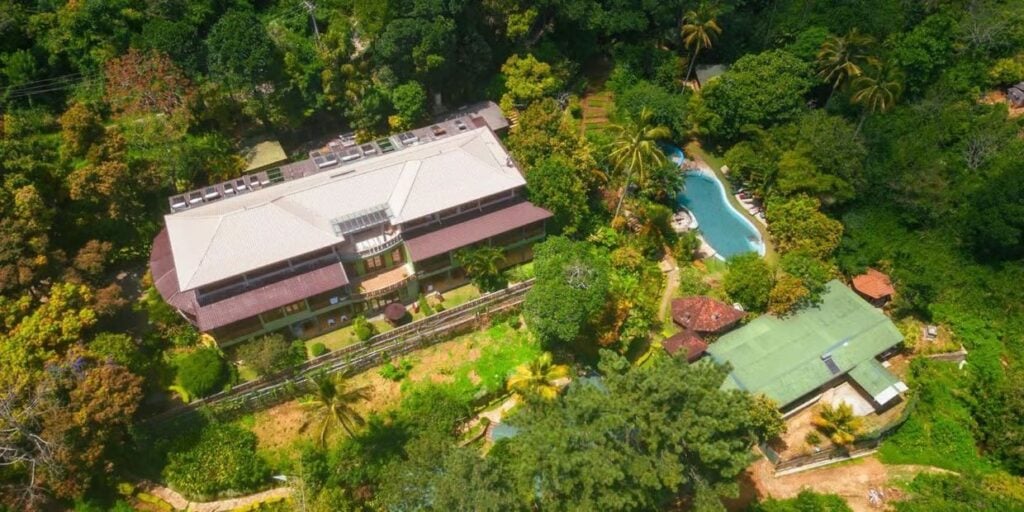
Our retreats are based at a small resort in the hills above Kandy, between jungle and tea plantations. Shared practice takes place in the glass-fronted Sati Hall with its sweeping views, and the kitchen is supplied from our own gardens. You’ll find all our current retreats in Sri Lanka, with their programs, teachers and prices, in one place.
Choose your retreat in Sri Lanka
Dates from late December 2026 to March 2027 with experienced teachers – or an individual Ayurvedic program on dates that suit you.
My motto is: “Longevity doesn’t come from performance. It comes from harmony with nature, the mind and your inner rhythm.” A good retreat is exactly that kind of time in harmony, wherever you spend it. And if Sri Lanka is calling you, I’d be so happy to welcome you to Yasmin Hill – perhaps at a morning practice in the Sati Hall, as the mist rises from the valley!
Zlata Holušová, founder of Yasmin Hill
This article is for information only and is not a substitute for medical care. Ayurvedic practices can complement, but not replace, treatment prescribed by your doctor. Talk to your doctor before taking herbs or starting a detox program – especially if you are pregnant, breastfeeding, taking medication or living with a chronic condition.
Frequently asked questions
Why go on a retreat?
To step out of everyday life long enough to rest properly and learn something you can keep. A retreat gives you a set rhythm, an experienced teacher and a group with the same intention, so there is nothing to organize. Research suggests the benefits of an ordinary holiday fade soon after you return to work; a retreat adds a practice, such as meditation, breathwork or movement, that you can continue at home.
What is a retreat in church?
In the Christian tradition, a retreat is time spent away from ordinary life for prayer and reflection, lasting anything from a few hours to a month. Its modern form goes back to the Spiritual Exercises of Ignatius of Loyola, originally a retreat of about 30 days in silence and solitude. Parishes and retreat houses today mostly offer shorter retreats, often a weekend or a week, sometimes partly or fully in silence.
What is another word for a spiritual retreat?
It depends on the tradition. Catholics may speak of making the Spiritual Exercises, Zen Buddhists of sesshin, and Theravada monks keep vassa, the three-month rains retreat; in Sufism, a period of seclusion is called khalwa. In everyday English, people also say a time of seclusion, a silent retreat or a sabbatical, although these words do not always imply a spiritual program with a teacher.
What does “retreat” mean in a hotel name?
Usually just that the place is quiet, secluded and designed for relaxation – a hideaway rather than a program. A hotel called a retreat may offer spa treatments or yoga classes, but that does not make your stay a retreat in the sense of a guided program with a theme, a daily rhythm and a teacher. If that is what you want, check whether there is a set program and who leads it.
How long should a retreat be?
It depends on your goal and how far you travel. A weekend is enough for a taste and some rest; a week allows a deeper dive into a practice. If you fly long-haul, to Sri Lanka for example, 10 to 14 nights make more sense, because the first days go on travel and acclimatization. At Yasmin Hill, the standard Panchakarma lasts 14 days, or 21 days in the Ultimate Cellular Reset program.
Can I go on a retreat alone?
Yes. A retreat is one of the best ways to travel on your own: shared practice, meals and circles help you get to know the others, while still leaving plenty of space to be by yourself. Before you sign up, check whether you will have a private or a shared room and whether there is a single supplement. It is also worth asking the organizer how big the group will be.
Is a retreat suitable for beginners?
Yes, if you choose a retreat designed for all levels. Look for a teacher who offers modifications and a program with a good balance of practice and free time. Leave intensive silent meditation retreats and demanding breathing techniques for later, especially if you are going through a difficult time or being treated for a mental health condition. A weekend or a week is a good way to start.
Sources
- Wiktionary: retreat – etymology and meanings
- Wikipedia: Retreat (spiritual)
- Wikipedia: Spiritual Exercises of Ignatius of Loyola
- Wikipedia: Vassa
- Wikipedia: Vipassana movement
- de Bloom J, et al.: Do we recover from vacation? Meta-analysis of vacation effects on health and well-being. Journal of Occupational Health, 2009
- Epel ES, et al.: Meditation and vacation effects have an impact on disease-associated molecular phenotypes. Translational Psychiatry, 2016
- Farias M, et al.: Adverse events in meditation practices and meditation-based therapies: a systematic review. Acta Psychiatrica Scandinavica, 2020
- GOV.UK (FCDO): Sri Lanka – entry requirements (checked 27 October 2026)
- Official Sri Lanka ETA portal, incl. the list of countries eligible for a free tourist ETA from 25 May 2026 (checked 27 October 2026)
About the author

Don't want to miss any news?
Just subscribe to our newsletter and we will let you know any new retreat, offer or anything.