


When people ask me about the best time to visit Sri Lanka, I always smile and say: almost any time – you just need to know where to go. This island runs two seasons at once. While the sun shines on the south coast, it can be raining in the east, and six months later it’s the other way round. So I’ve put together a month-by-month guide with verified climate data, festival dates and a few tips from our hill above Kandy.
Best time to visit Sri Lanka in a nutshell: go to the south and west coasts from December to March, to the hill country around Kandy from January to March, and to the east coast from April to September. The Cultural Triangle is good from January to September, except stormy April. October and November are the wettest months island-wide.
All climate figures here are 30-year averages: the World Meteorological Organization (WMO) climate normals for 1991–2020 from Sri Lanka’s official weather stations, as published in the archive of the US National Oceanic and Atmospheric Administration (NOAA). Sea temperatures come from NOAA’s sea-surface temperature dataset, and festival dates from the official holiday calendars for 2026/2027. The climate data were checked on 13 October 2026 and the travel rules on 27 October 2026; all sources are listed at the end.
In this article
- The short answer: the best time to visit Sri Lanka, region by region
- Sri Lanka’s two monsoons, explained simply
- Sri Lanka’s climate regions
- Sri Lanka weather by month: the tables
- Best time to visit Sri Lanka, month by month
- When to come for Ayurveda (and why it needn’t be the driest month)
- Winter sun: how Sri Lanka compares in January
- Hills and beach: combining Kandy and the coast in one trip
- Floods, landslides and cyclones in Sri Lanka: what to know
- Practical basics before you book
- When to come to Yasmin Hill: 2026/2027
- Sources
The short answer: the best time to visit Sri Lanka, region by region
Sri Lanka is only about the size of Ireland, but its weather has several faces. This is the quick version; the details, tables and month-by-month notes follow below.
- South and west coasts (Colombo, Bentota, Galle, Mirissa, Tangalle): December to March, with January and February the most reliable.
- East coast (Trincomalee, Pasikudah, Arugam Bay): April to September; June is the driest month.
- Cultural Triangle (Sigiriya, Dambulla, Anuradhapura, Polonnaruwa): January to March and May to September. Avoid October to December, and expect thunderstorms in April.
- Hill country (Kandy, Nuwara Eliya, Ella): January to March is the driest stretch. In summer the eastern hills around Ella are drier than Nuwara Eliya.
- The north (Jaffna): January to September; nearly all the year’s rain falls between October and December.
- An Ayurvedic stay in the hills: any month. January to March gives you the driest skies, May to September a quieter island and often cheaper flights.
If you can only pick one month, pick February. It is the one month when almost the whole island is in good shape: Kandy has its driest month of the year (78 mm of rain), Galle on the south coast gets 71 mm, Anuradhapura in the Cultural Triangle 60 mm, and even Trincomalee on the east coast is drying out (96 mm over five rainy days).
The least reliable time is October to November, when the inter-monsoon brings rain to the whole island. October is the wettest month in Colombo (359 mm), Galle (345 mm) and Kandy (303 mm); in the north and east, November and December take over.
Sri Lanka’s two monsoons, explained simply
It all comes down to two monsoons: seasonal winds that change direction twice a year. The mountains in the middle of the island act like a wall. Moist air from the ocean runs into them and drops its rain on the windward side, while the far side stays much drier. That is why Galle in the south-west can be cloudy on the same day that Trincomalee in the north-east is bright and clear.
Sri Lanka’s official tourism website divides the year into four periods:
- North-east monsoon (Maha season), December–February: rain falls mainly in the north and east. The south, the west and the hills have their peak season, with clear skies and calm seas.
- First inter-monsoon, March–April: hot and humid, with thunderstorms across the island, usually in the afternoon or evening.
- South-west monsoon (Yala season), May–September: rain on the west and south coasts and the windward slopes of the hills. The east and north are dry and sunny.
- Second inter-monsoon, October–November: showers and storms all over the island, sometimes heavy, and occasionally tropical cyclones from the Bay of Bengal.
The boundaries between these periods are not sharp, and they shift by a few weeks from year to year. One reassuring detail: a “rainy day” in climate tables means a day with at least 1 mm of rain, not a day of non-stop downpour. In the tropics it is often a short afternoon shower.

Sri Lanka’s climate regions
Once you know how each part of the island behaves, you can plan a good trip for any month of the year.
South and west coasts: Colombo, Bentota, Galle, Mirissa
This is the classic beach coast, with the old fort town of Galle and the surf and whale-watching towns further east. The season runs from December to March: from January to March, Galle gets only 71–90 mm of rain a month and Colombo 77–103 mm. From May to September the south-west monsoon brings rough seas and frequent rain, and the wettest months are May (Galle 316 mm) and October (Galle 345 mm, Colombo 359 mm). Temperatures barely change all year: 29–32 °C (84–90 °F) by day and 23–26 °C (73–79 °F) at night.
One useful nuance: the far south-east around Hambantota and Yala National Park lies in Sri Lanka’s dry zone. Hambantota gets just 31–73 mm a month from May to August, so the south-eastern end of the coast is a reasonable compromise in summer, when Galle is much wetter.
East coast: Trincomalee, Pasikudah, Arugam Bay
The east coast lives to the opposite rhythm. From April to September it is dry and sunny: in June, Trincomalee averages just 26 mm of rain and Arugam Bay (Pottuvil station) only 14 mm. Days are hot at 33–35 °C (91–95 °F), and the sea is 28–30 °C (82–86 °F). From October to January the north-east monsoon arrives, and November and December bring 340–380 mm to Trincomalee and up to 470 mm to Batticaloa, near Pasikudah.
The east coast does not dry out all at once. Trincomalee in the north-east is already fairly dry in February (96 mm), while Arugam Bay in the south-east still gets 137 mm that month and only settles from March.
Cultural Triangle: Sigiriya, Dambulla, Anuradhapura, Polonnaruwa
The ancient royal cities and rock temples of the north-central plains are in the dry zone, and they are drier for longer than many guides suggest. Anuradhapura gets 60–86 mm a month from January to March and only 15–43 mm from June to August. The wet season here is October to December (225–281 mm a month), with a stormy spell in April (180 mm).
The catch is heat. From March to September, afternoon highs reach 33–35 °C (91–95 °F), and climbing the Sigiriya rock fortress at noon is hard work. Go early in the morning. The Maha Illuppallama station near Dambulla shows the same pattern, slightly cooler.
Hill country: Kandy, Nuwara Eliya, Ella
The hilly heart of the island is pleasant all year. Kandy sits at around 500 m above sea level, with daytime highs of 28–32 °C (82–90 °F) and nights of 19–22 °C (66–71 °F). Temperatures drop by roughly 0.6 °C for every 100 m you climb, so in Nuwara Eliya (1,868 m) it is only 19–23 °C (66–73 °F) by day and 10–14 °C (50–57 °F) at night. The Bandarawela station near Ella (1,226 m) sits in between, at 23–27 °C by day and 15–18 °C at night.
The hills catch rain from both monsoons, and the wettest months are October and November. In summer it depends which side of the mountains you are on. Nuwara Eliya, on the western side, gets 155–168 mm in June and July, while Bandarawela on the eastern side gets only 71–91 mm, so the Ella area is a better summer bet.
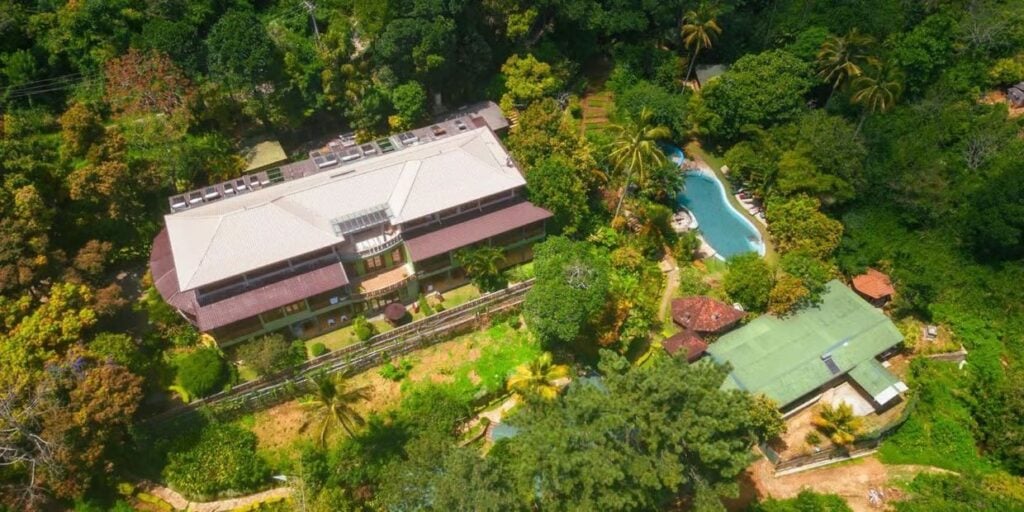
Yasmin Hill stands in the hills above Kandy, near the village of Moragolla, between jungle and tea plantations. The best guide to our weather is therefore the official Kandy station in the tables below. But I’ll tell you one thing without any table: I love the moment in the morning when the mist rises from the valley and the eagles begin to circle above the trees.
The north: Jaffna
The far north is the driest corner of the island for most of the year: from January to September, Jaffna gets 19–81 mm a month. Then the north-east monsoon makes up for it, with 235 mm in October and 437 mm in November.
Sri Lanka weather by month: the tables
The first table covers the hill country, the second the coasts and the Cultural Triangle, and the third gives each month a simple verdict by region.
Kandy and the hill country
| Month | Kandy high / low | Kandy rain: mm (in) / rainy days | Nuwara Eliya high / low | Nuwara Eliya rain: mm / rainy days |
|---|---|---|---|---|
| January | 29 / 19 °C (83 / 66 °F) | 103 (4.1) / 8 | 20 / 10 °C | 116 / 10 |
| February | 30 / 19 °C (86 / 66 °F) | 78 (3.1) / 6 | 21 / 10 °C | 73 / 7 |
| March | 32 / 20 °C (90 / 68 °F) | 98 (3.8) / 7 | 22 / 11 °C | 72 / 7 |
| April | 31 / 21 °C (89 / 71 °F) | 189 (7.4) / 13 | 23 / 12 °C | 134 / 13 |
| May | 30 / 22 °C (86 / 71 °F) | 141 (5.6) / 10 | 22 / 13 °C | 172 / 13 |
| June | 29 / 22 °C (83 / 71 °F) | 125 (4.9) / 14 | 19 / 14 °C | 168 / 15 |
| July | 28 / 22 °C (83 / 71 °F) | 108 (4.3) / 13 | 19 / 14 °C | 155 / 16 |
| August | 29 / 21 °C (83 / 70 °F) | 95 (3.8) / 11 | 19 / 13 °C | 132 / 14 |
| September | 29 / 21 °C (84 / 69 °F) | 124 (4.9) / 12 | 20 / 13 °C | 161 / 15 |
| October | 29 / 21 °C (84 / 69 °F) | 303 (11.9) / 18 | 20 / 13 °C | 247 / 19 |
| November | 29 / 21 °C (84 / 69 °F) | 269 (10.6) / 17 | 20 / 12 °C | 226 / 18 |
| December | 28 / 20 °C (82 / 68 °F) | 204 (8.0) / 13 | 19 / 12 °C | 183 / 15 |
The coasts and the Cultural Triangle: rainfall and sea temperature
| Month | Colombo (west) | Galle (south) | Trincomalee (north-east) | Arugam Bay (south-east) | Anuradhapura (Cultural Triangle) | Sea, south / east |
|---|---|---|---|---|---|---|
| January | 80 / 5 | 87 / 7 | 152 / 8 | 263 / 10 | 86 / 6 | 28 / 28 °C (82 / 82 °F) |
| February | 77 / 5 | 71 / 6 | 96 / 5 | 137 / 8 | 60 / 4 | 28 / 28 °C (83 / 82 °F) |
| March | 103 / 8 | 90 / 7 | 55 / 4 | 61 / 5 | 62 / 5 | 29 / 29 °C (85 / 84 °F) |
| April | 249 / 13 | 202 / 12 | 48 / 4 | 68 / 5 | 180 / 11 | 30 / 30 °C (86 / 86 °F) |
| May | 314 / 17 | 316 / 17 | 72 / 4 | 48 / 4 | 94 / 6 | 30 / 30 °C (85 / 86 °F) |
| June | 197 / 15 | 184 / 17 | 26 / 2 | 14 / 2 | 15 / 3 | 29 / 29 °C (84 / 85 °F) |
| July | 123 / 10 | 173 / 15 | 51 / 3 | 17 / 2 | 24 / 3 | 28 / 29 °C (83 / 84 °F) |
| August | 116 / 10 | 162 / 14 | 67 / 4 | 19 / 3 | 43 / 4 | 28 / 28 °C (82 / 83 °F) |
| September | 264 / 15 | 261 / 17 | 113 / 6 | 52 / 4 | 67 / 5 | 28 / 29 °C (83 / 83 °F) |
| October | 359 / 19 | 345 / 18 | 216 / 13 | 135 / 9 | 259 / 14 | 29 / 29 °C (83 / 84 °F) |
| November | 346 / 16 | 283 / 15 | 376 / 18 | 308 / 15 | 281 / 17 | 29 / 29 °C (84 / 84 °F) |
| December | 171 / 9 | 176 / 11 | 339 / 15 | 307 / 13 | 225 / 12 | 28 / 28 °C (83 / 82 °F) |
Verdict for every month
| Month | South and west coasts | East coast | Cultural Triangle | Hill country and Kandy | Ayurveda in the hills |
|---|---|---|---|---|---|
| January | excellent | wet (monsoon) | good | excellent | ideal |
| February | excellent | improving; still wet around Arugam Bay | excellent | excellent, driest month | ideal |
| March | very good | good | good, hot | very good, hottest month | very good |
| April | changeable | excellent | stormy, very hot | afternoon storms | good |
| May | monsoon | excellent | good | showers | good, quiet |
| June | monsoon | excellent, driest month | excellent | showers | good, quiet |
| July | changeable | excellent | excellent | showers | good, quiet |
| August | changeable | excellent | very good | showers; Kandy Perahera | good, quiet |
| September | wet | good | good | showers | good, quiet |
| October | wettest month | turning wet | wet | wettest month | possible |
| November | wet | monsoon | wet | very wet | possible |
| December | good from mid-month | monsoon | wet | showery, improving | good |
My tip: Always pack a light sweater or shawl for the hills. Mornings and evenings are fresh, and you’ll be glad of the extra layer during early meditation in our glass-walled Sati Hall.
Winter in the hills above Kandy
From January to March, Kandy has highs of 29–32 °C and the fewest rainy days of the year – just six to eight a month. Choose your dates and the length of your stay.
Best time to visit Sri Lanka, month by month
Now for the part I enjoy most: every month in Sri Lanka has its own mood. For each one I’ve added the festivals and public holidays for 2026/2027, because full-moon celebrations and processions of decorated elephants are the kind of thing you never forget. Every full moon (Poya) is a public holiday, and alcohol is usually not sold that day.
Sri Lanka in January
One of the best months for the south, the west and the hills. Kandy averages 103 mm of rain over eight rainy days, with highs of 29 °C (83 °F) and nights around 19 °C (66 °F). Galle gets 87 mm, Colombo 80 mm, and the sea is 28 °C (82 °F). The Cultural Triangle is pleasant at around 30 °C. The east is still under the tail of the north-east monsoon: Trincomalee gets over 150 mm and Arugam Bay more than 260 mm.
Festivals: the Tamil harvest festival Thai Pongal (15 January 2027) and Duruthu Poya (22 January 2027). Every January the Kelaniya temple near Colombo holds the Duruthu Perahera procession; the temple announces the exact 2027 date. January is peak season, so flights and beach hotels cost more. Verdict: excellent for the south, west, hills and Cultural Triangle; not yet for the east coast.
Sri Lanka in February
The driest month in Kandy: 78 mm of rain over six rainy days, afternoons of 30 °C (86 °F) and mornings around 19 °C (66 °F). The south and west are at their best (Galle 71 mm, Colombo 77 mm), the Cultural Triangle is dry (Anuradhapura 60 mm), and the east coast is improving quickly around Trincomalee (96 mm).
Festivals: Independence Day (4 February) and Navam Poya (20 February 2027). Around this full moon, the Gangaramaya temple in Colombo usually holds the Navam Perahera, with elephants and Kandyan dancers; the temple announces the date. Verdict: the best all-round month of the year.
Sri Lanka in March
The last reliable month for the south and west, and the hottest month in the hills: Kandy reaches around 32 °C (90 °F), with 98 mm of rain over seven rainy days. As the first inter-monsoon begins, afternoon thunderstorms become more frequent, especially late in the month. The east opens up: Trincomalee averages only 55 mm over four rainy days. In the Cultural Triangle it gets hot, at around 35 °C (95 °F).
Holidays in 2027: Maha Shivaratri (6 March), Medin Poya (22 March) and Good Friday (26 March). Verdict: very good almost everywhere. If you struggle with heat (in Ayurveda, typically a Pitta dosha type), January and February will suit you better.
Sri Lanka in April
The month when the weather turns. Kandy averages 189 mm of rain over 13 days, mostly in afternoon or evening storms. The south and west are changeable (Galle 202 mm, Colombo 249 mm), but the east coast is at its best: Trincomalee gets 48 mm and the sea reaches 30 °C (86 °F).
Festivals: Sinhala and Tamil New Year (Avurudu) on 13–14 April 2027. Families travel home, many shops and services close, and transport is packed. Bak Poya falls on 20 April 2027, and April is the height of the pilgrimage season to Adam’s Peak (2,243 m). Verdict: head for the east coast; elsewhere, expect storms.
Sri Lanka in May
The south-west monsoon arrives, making May one of the wettest months on the south and west coasts: Galle averages over 300 mm over 17 rainy days. The east is dry and sunny (Trincomalee 72 mm, Arugam Bay 48 mm). Kandy gets much less rain than the south coast (141 mm over ten days), with temperatures between 22 and 30 °C (71–86 °F).
Festivals: Vesak Poya (19 May 2027, with the following day also a holiday) marks the birth, enlightenment and passing of the Buddha. Streets are hung with lanterns and illuminated gateways, and roadside stalls hand out free food and drinks. Verdict: east coast, the north and the Cultural Triangle; a quieter season begins in the hills.
Sri Lanka in June
The driest month of the year on the east coast: Trincomalee averages just 26 mm over two rainy days, Arugam Bay 14 mm, and the sea is 29 °C (84 °F). The Cultural Triangle is just as dry (Anuradhapura 15 mm). The south and west remain in the monsoon (Galle 184 mm over 17 days). In Kandy it is 29 °C by day and 22 °C at night, with showers on about 14 days of the month.
Festivals: Poson Poya (18 June 2027) celebrates the arrival of Buddhism in Sri Lanka, with the main celebrations in Mihintale and Anuradhapura. Verdict: east coast and Cultural Triangle at their best; the hills are fine if you don’t mind the odd shower.
Sri Lanka in July
Prime time for the east coast: Trincomalee, Pasikudah and Arugam Bay are dry and sunny, with the sea around 29 °C (84 °F). On the south and west coasts the monsoon is easing (Galle 173 mm), and Kandy sees around 28 °C (83 °F) and 108 mm of rain.
Festivals: Esala Poya (18 July 2027). Sri Lanka’s most famous procession, the Esala Perahera in Kandy, usually takes place in July or August. The Temple of the Sacred Tooth Relic (Sri Dalada Maligawa) announces the 2027 dates; in 2026 the processions ran from 18 to 28 August. Verdict: east coast, Cultural Triangle and hills.
Sri Lanka in August
Much like July: sunshine in the east (Trincomalee 67 mm), changeable weather with showers in the south and west (Galle 162 mm), and 29 °C by day and 21 °C at night in Kandy, with 95 mm of rain.
Festivals: the high point of the Esala Perahera is the great night procession, the Randoli, usually held on the Nikini full moon (27 August in 2026; in 2027 Nikini Poya falls on 16 August). Kandy’s hotels fill up fast around these dates, so book well ahead. Verdict: east coast, Cultural Triangle, and Kandy for the Perahera.
Sri Lanka in September
A transitional, quiet month. The south and west get wet (Galle 261 mm over 17 rainy days), while the east is still mostly dry (Trincomalee 113 mm), although its season is winding down. Kandy gets 124 mm, with 29 °C by day and 21 °C at night.
Festivals: no major celebrations; Binara Poya falls on 15 September 2027. Fewer tourists and often lower air fares. Verdict: east coast early in the month, the Cultural Triangle, and a calm month for a longer Ayurvedic program.
Sri Lanka in October
The second inter-monsoon begins and it rains across the island, most often in afternoon and evening storms. With 303 mm over 18 rainy days, October is Kandy’s wettest month, and Galle gets as much as 345 mm. The hills are at their greenest. In the east the clouds start to gather (Trincomalee 216 mm).
Festivals: Vap Poya (25 October 2026; 15 October 2027) and Deepavali, the Hindu festival of lights (28 October 2027). Verdict: the wettest month for the south-west and the hills. Fine for an Ayurvedic stay if you don’t need sunshine – the classical texts actually build cleansing into the rainy season.
Sri Lanka in November
The second-wettest month in Kandy (269 mm over 17 rainy days) and the wettest in the east and north as the north-east monsoon sets in (Trincomalee 376 mm, Jaffna 437 mm). The south and west get around 280–350 mm. This is also when tropical cyclones form over the Bay of Bengal; at the end of November 2025, Cyclone Ditwah caused devastating floods (more on that below). Temperatures stay pleasant, at 29/21 °C in Kandy.
Festivals: Deepavali (8 November 2026) and Il Poya (24 November 2026). Verdict: the least reliable month overall. An Ayurvedic stay is possible, but build some slack into your plans and keep an eye on weather warnings.
Sri Lanka in December
The tide turns. Rain eases on the south and west coasts (Galle 176 mm over 11 rainy days, Colombo 171 mm), and Christmas marks the start of peak season – and of the year’s highest air fares. The east is in the monsoon (Trincomalee 339 mm). Kandy still gets 204 mm over 13 rainy days, with 28 °C by day and 20 °C at night.
Festivals: Unduvap Poya (23 December 2026) and Christmas (25 December). The main season for climbing Adam’s Peak runs from December to May. Verdict: good for the south and west, especially from mid-December, and a lovely start to the season if you combine the hills with the coast – exactly how our New Year retreat in Sri Lanka is built.
When to come for Ayurveda (and why it needn’t be the driest month)
This is the question closest to my heart. For a beach holiday, the weather decides everything. For an Ayurvedic stay it matters too, but it isn’t the main thing: you spend most of the day on treatments, rest, gentle movement and meals from our gardens, all under a roof or in the shade of the trees. What matters more is when you can give yourself two or three quiet weeks.
Ayurveda works with the seasons itself. Its seasonal regimen, ritucharya, links each season with a different dosha. According to the classical texts, Kapha builds up in spring, when vamana (therapeutic emesis) is recommended; Vata in the rainy season, when medicated enemas (basti) are advised; and Pitta in autumn, the time for virechana (therapeutic purgation). The junctions between seasons (ritusandhi) also get special attention. So the monsoon is no obstacle for Ayurveda: the classical texts plan around it.
How to choose your dates
- January–March: the fewest rainy days of the year in the hills (six to eight a month) and an escape from the northern winter. A cold, dry, windy European winter has the qualities Ayurveda attributes to Vata, which is traditionally balanced with warmth, routine and oil. The downside: peak season and pricier flights.
- May–September: green hills, occasional showers and highs of 28–30 °C in Kandy. Fewer tourists and often cheaper flights. Well suited to a longer panchakarma, when you hardly leave the resort anyway.
- October–November: the most rain of the year. Fine for a stay at the resort, less so for touring the island.
- If you are sensitive to heat: March and April are the hottest months in the hills (31–32 °C by day), so choose January, February or the second half of the year.
My tip: If you’re torn between dates, choose the one when you can give yourself at least two quiet weeks – not the one with the best forecast. Rain on the glass walls of the Sati Hall has its own magic.
At Yasmin Hill we offer individual Ayurvedic programs, from a 72-hour reset to a 21-day panchakarma, which you can book for your own dates all year round. The week-long Metabolic Kickstart (7 days / 6 nights) starts at USD 1,284, and the full 21-day panchakarma, The Ultimate Cellular Reset, at USD 3,700 (prices as of October 2026). Programs include accommodation, meals, treatments and consultations with the resort’s Ayurvedic doctor; we are happy to arrange a private airport transfer for a fee. Our panchakarma guide explains how the cleanse works day by day, and our page on Ayurveda in Sri Lanka gives the wider picture.
This article is for information only and is not a substitute for medical care. Ayurvedic practices can complement, but not replace, treatment prescribed by your doctor. Talk to your doctor before taking herbs or starting a detox program – especially if you are pregnant, breastfeeding, taking medication or living with a chronic condition.
Ayurveda in the hills above Kandy
Individual programs from three to 21 days, with Ayurvedic doctor consultations, treatments and meals. One-week program from USD 1,284 (prices as of October 2026).
Winter sun: how Sri Lanka compares in January
Of course I love Sri Lanka, but I want you to decide based on real numbers. This is what January looks like in popular winter-sun destinations, with time differences and flight times from London:
| Destination (weather station) | Daytime high | Sea | Rain / rainy days | Time difference from the UK | Flight from London (indicative) |
|---|---|---|---|---|---|
| Sri Lanka – south coast (Galle) | 30 °C (86 °F) | 28 °C (82 °F) | 87 mm / 7 | +5.5 h | non-stop about 11 h, or 12–16 h with one change |
| Sri Lanka – hills (Kandy) | 29 °C (83 °F) | – | 103 mm / 8 | +5.5 h | as above, plus a 3–3.5 h transfer |
| Thailand (Phuket) | 33 °C (91 °F) | 28 °C (83 °F) | 50 mm / 4 | +7 h | 14–17 h with one change |
| Bali (Denpasar) | 33 °C (91 °F) | 29 °C (84 °F) | 345 mm / – | +8 h | 17–20 h with one change |
| Maldives (Malé) | 31 °C (87 °F) | 28 °C (83 °F) | 87 mm / 6 | +5 h | 10–14 h, direct or with one change |
| Canary Islands (Santa Cruz de Tenerife) | 22 °C (71 °F) | 20 °C (67 °F) | 29 mm / 4 | 0 h | direct, about 4.5 h |
| Egypt (Hurghada) | 22 °C (72 °F) | 23 °C (73 °F) | under 1 mm / 0 | +2 h | direct, about 5–5.5 h |
| For comparison: London (Heathrow) | 8 °C (47 °F) | – | 59 mm / 12 | – | – |
The honest summary: Egypt and the Canaries are closer and cheaper to reach, but in January they are not tropical – around 22 °C by day and a sea of 20–23 °C. Bali is in its rainy season in January, with around 345 mm in Denpasar. Thailand is even drier than southern Sri Lanka in January, and the Maldives get about the same rain.
What Sri Lanka offers that is hard to find elsewhere is the combination: a warm sea, cool green hills with tea plantations and misty mornings, and a living Ayurvedic tradition, all on one island.
Hills and beach: combining Kandy and the coast in one trip
You’ll get the most out of the island if you split your trip: first the hills, where you slow down and recover, then a few days by the sea. From January to March this works perfectly, because both the hills and the south coast are at their driest. A sample two-week plan:
- Day 1: arrive at Colombo airport (CMB) and transfer to the hills. The drive to Yasmin Hill takes about 3–3.5 hours.
- Days 2–10: the hills – an Ayurvedic program, plus trips to Kandy for the Temple of the Sacred Tooth Relic and to the Royal Botanic Gardens in Peradeniya.
- Day 11: transfer to the south coast; allow half a day on the road.
- Days 12–14: beach time around Galle, Mirissa or Tangalle, then back to Colombo airport.
For a more romantic journey, many people dream of the train. The famous Main Line climbs from Colombo through Kandy and the tea plantations, rises to Pattipola at 1,898 m and continues to Ella and Badulla. Cyclone Ditwah damaged it in many places in November 2025, though. As of mid-October 2026 there was no through train from Kandy to Ella: trains from Colombo ran only as far as Peradeniya and Gampola, while the upper section from Nanu Oya, near Nuwara Eliya, to Ella and Badulla has been running again since 20 June 2026. The practical plan is to drive to Nanu Oya and take the train from there over the most scenic stretch. Check the current service before you travel; our guide to what to see in Kandy and the best day trips has more on the line.
Our New Year retreat follows exactly this pattern: 14 nights from 27 December 2026 to 10 January 2027, partly with us at Yasmin Hill and partly on the coast. It is held in Czech; you can read more about it in our article on the New Year retreat in Sri Lanka.

Floods, landslides and cyclones in Sri Lanka: what to know
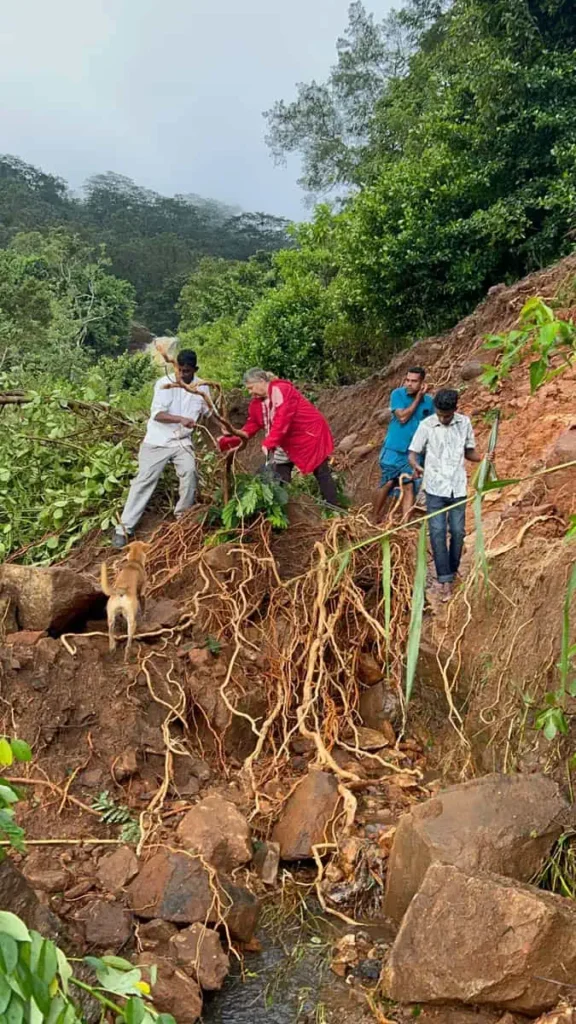
This part isn’t easy for me to write, but an honest guide needs it. Sri Lanka is a tropical country, and from time to time it is hit by extreme weather. Most recently, at the end of November 2025, Cyclone Ditwah and its remnants crossed the island between 27 and 29 November, bringing extremely heavy rain, floods and landslides.
The worst-affected districts were Kandy, Nuwara Eliya, Badulla and Kurunegala. As of 15 December 2025, Sri Lanka’s Disaster Management Centre (DMC) had recorded 643 deaths, 183 people missing and around 1.62 million people affected.
The storm also hit the area around Moragolla, where Yasmin Hill stands. Our neighbors and the local community are very close to our hearts, so since the cyclone we have been running a relief initiative. You can find the details, and a way to contribute, on our Help Moragolla page.
What this means for your planning:
- The riskiest period is the wet season from October to December, especially November, when cyclones form over the Bay of Bengal. The onset of the monsoon can also bring heavy downpours. As of 27 October 2026, the UK Foreign Office (FCDO) notes that heavy inter-monsoon rain has increased the risk of flooding and landslides across the island.
- Take out travel insurance that covers medical treatment and repatriation. The FCDO points out that emergency treatment outside the main cities is not readily available and that private hospital care can be expensive.
- Watch the warnings from Sri Lanka’s Disaster Management Centre and the forecasts of the Department of Meteorology.
- In November and December, plan with slack and avoid driving on mountain roads after dark; the FCDO warns that road accidents are frequent, particularly at night.
- Respect the sea. According to the FCDO, many beaches have dangerous surf or rip tides at certain times of the year. Ask your hotel before you swim.
Practical basics before you book
A few things worth checking before you buy your flights. All information is correct as of 27 October 2026.
Flights and time difference
From London Heathrow there are non-stop flights to Colombo of roughly 11 hours. From regional UK airports and most of continental Europe you will change planes once, usually in the Gulf or Istanbul, and should allow 12–16 hours in total. Sri Lanka runs on UTC+5:30 all year, which puts it five and a half hours ahead of the UK in winter and four and a half in summer. One current caveat: the FCDO warns that escalation in the Middle East has disrupted some flights between Colombo and the UK via Middle Eastern hubs, so check with your airline before you book a Gulf connection.
Visa and ETA
Every visitor needs an Electronic Travel Authorization (ETA). Since 25 May 2026, nationals of 40 countries, including the UK, the United States, Germany and the Netherlands, have been able to get a tourist ETA free of charge. Ireland is not on the list. Other nationalities pay USD 50 online. Free does not mean automatic: you still apply online before you fly. The ETA is valid for 30 days with two entries, and longer stays need a paid extension. Your passport must be valid for at least six months after arrival. Rules have changed several times in recent years, so check eta.gov.lk and the FCDO entry requirements shortly before you travel.
My tip: Apply for your ETA only on the official portal, eta.gov.lk. If a website asks you for a ‘processing fee’, you’re on an intermediary’s site – for UK, US and many EU passports the tourist ETA is now free.
Vaccinations and health
See your GP practice or a travel clinic; the FCDO recommends checking the latest vaccine advice at least eight weeks before your trip. The UK’s National Travel Health Network and Centre (NaTHNaC) lists tetanus for most travelers and hepatitis A, typhoid, rabies and Japanese encephalitis, among others, for some. The main weather-related health risk is dengue fever. It is spread by Aedes mosquitoes, which bite during the day, and WHO lists high rainfall, temperature and humidity among the factors behind its spread. Protect yourself with long sleeves and a repellent containing DEET, picaridin or IR3535. There is no malaria in Sri Lanka: WHO certified the country malaria-free in 2016.
Safety
As of 27 October 2026, the FCDO does not advise against travel to any part of Sri Lanka. Cover your shoulders and legs and take off your shoes and hat in Buddhist temples. Visible tattoos of the Buddha can get you refused entry or deported, and you should not pose for photos in front of a Buddha statue.
What to pack for the hills
- Layers: light clothes for the day and a sweater or shawl for mornings and evenings (19–22 °C in Kandy, 10–14 °C in Nuwara Eliya).
- A light rain jacket or umbrella – useful in any month.
- Sturdy shoes for walks in the hills, plus sandals.
- Clothes that cover your shoulders and knees for temple visits.
- Repellent, sunscreen and a hat – close to the equator the sun is strong even through cloud.
When to come to Yasmin Hill: 2026/2027
Our Ayurvedic programs of 3, 7, 10, 14 or 21 days can be booked for your own dates in any month, including the quieter months from May to September, when the hills are at their greenest.
In the 2026/2027 dry season we also host four group retreats at Yasmin Hill. Please note that all of them are held in Czech (prices as of October 2026):
- New Year’s Conscious Awakening – 27 December 2026 to 10 January 2027, 14 nights in the hills and by the ocean, from about USD 2,120 (standard price, as of October 2026) excluding flights, booked through our partner organizer.
- Awaken Your Inner Qi (Zhineng Qigong and Ayurveda) – 1–13 February 2027, 12 nights, from USD 2,150.
- The Rhythm Within (craniosacral therapy and Ayurveda) – 15–28 February 2027, 13 nights, from USD 2,100.
- Leadership Recharge – 1–14 March 2027, 13 nights, from USD 4,300.
Not sure which month suits you?
Tell us when you’d like to travel and what you’re looking for, and we’ll help you choose the right dates and program.
Whether you come in February, when the hills are at their driest, or in August, when everything around smells of rain and greenery, Sri Lanka will welcome you with warmth. What makes me happiest is seeing guests slow down, breathe out and find their own rhythm again. Because I believe longevity doesn’t come from performance. It comes from harmony with nature, the mind and your inner rhythm. I would be so glad if you came to look for yours with us at Yasmin Hill.
Zlata Holušová, founder of Yasmin Hill
Frequently asked questions
Is it a good time to visit Sri Lanka?
Almost always, as long as you choose the right part of the island. From December to March, head for the south and west coasts and the hills around Kandy; from April to September, for the east coast and the Cultural Triangle. Only October and November are wet almost everywhere, and even then the rain usually comes in afternoon storms. Check the FCDO travel advice before you book.
When to avoid visiting Sri Lanka?
If you want reliable beach weather, avoid October and November, when the inter-monsoon brings rain to the whole island; October is the wettest month in Colombo, Galle and Kandy. Skip the south and west coasts in May, when the south-west monsoon arrives, and the east coast from November to January, during the north-east monsoon. Tropical cyclones are most likely in November.
What is the rainiest month in Sri Lanka?
It depends on the region. On the west and south coasts and in the hills, October is the wettest month: Colombo averages 359 mm of rain, Galle 345 mm and Kandy 303 mm (WMO normals 1991–2020). In the north and north-east, November takes over, with 437 mm in Jaffna and 376 mm in Trincomalee, and around Batticaloa on the east coast it is December, with 469 mm.
What is the hottest month of the year in Sri Lanka?
The hottest stretch runs from March to May. In Kandy, March is the hottest month, with average highs of 32 °C (90 °F). Anuradhapura in the Cultural Triangle reaches 35 °C in March and April, and Trincomalee on the east coast averages 35 °C from May to September. The sea is warmest in April and May, at around 30 °C (86 °F). The hill country stays coolest all year.
Is it safe to visit Sri Lanka right now?
As of 27 October 2026, the UK Foreign Office (FCDO) does not advise against travel to any part of Sri Lanka. It does warn that heavy inter-monsoon rain has raised the risk of floods and landslides, that road accidents are frequent at night and that some beaches have dangerous rip tides. Take out travel insurance, follow local warnings and check the FCDO advice shortly before you fly.
Is December a good time to visit Sri Lanka?
Yes for the south and west coasts, especially from mid-December. The rain eases (Galle averages 176 mm over 11 rainy days), daytime highs are around 30 °C and the sea is 28 °C. The hills around Kandy are still showery, with 13 rainy days, and the east coast is in the north-east monsoon. Christmas marks the start of peak season, so book flights and hotels early.
When is the best time to visit Kandy?
January to March has the fewest rainy days in Kandy: six to eight a month, with 78–103 mm of rain and highs of 29–32 °C. February is the driest month. To see the famous Esala Perahera procession, come in July or August; in 2026 it ran from 18 to 28 August, and the Temple of the Sacred Tooth Relic announces the 2027 dates. October and November are the wettest months.
Sources
- WMO climate normals 1991–2020, NOAA NCEI archive (dataset description) – stations Katugastota (Kandy), Nuwara Eliya, Bandarawela, Colombo, Galle, Hambantota, Trincomalee, Batticaloa, Pottuvil (Arugam Bay), Anuradhapura, Maha Illuppallama, Jaffna (checked 13 October 2026)
- Comparison stations, same dataset: Phuket, Hulhulé (Malé), Santa Cruz de Tenerife, Hurghada, London Heathrow; WMO World Weather Information Service – Denpasar
- NOAA NCEI – Extended Reconstructed Sea Surface Temperature (ERSST v5) and NOAA PSL – ERSST v5 monthly long-term means 1991–2020 (our own calculation)
- Wikipedia – elevations and background: Kandy, Nuwara Eliya, Sigiriya
- Sri Lanka Tourism – Weather (monsoon periods)
- Department of Meteorology, Sri Lanka – forecasts and warnings
- Disaster Management Centre, Sri Lanka – situation reports and warnings
- ReliefWeb / ECHO Daily Flash, 15 December 2025 – Tropical storm Ditwah and floods
- GOV.UK – Foreign travel advice, Sri Lanka: warnings and insurance, safety and security, entry requirements, health (still current at 27 October 2026)
- Sri Lanka Electronic Travel Authorization – official portal (free tourist ETA for 40 countries from 25 May 2026)
- NaTHNaC (TravelHealthPro) – Sri Lanka
- WHO – Dengue and severe dengue; WHO – Sri Lanka certified malaria-free (2016)
- Central Bank of Sri Lanka – bank holidays 2027 and Ada Derana – official 2026 holiday calendar
- Sri Dalada Maligawa – Esala Perahera dates 2026; Wikipedia – Kandy Esala Perahera
- Wikipedia – Kelaniya Raja Maha Vihara (Duruthu Perahera); Daily Mirror – Navam Perahera; Wikipedia – Adam’s Peak
- Wikipedia – Main Line (Sri Lanka); Ada Derana (20 June 2026): Nanu Oya – Badulla services resume; Colombo Times (2 October 2026): trains to Peradeniya and Gampola resume, Peradeniya–Kandy awaits bridge repairs
- Thakkar J., Chaudhari S., Sarkar P. K.: Ritucharya: Answer to the lifestyle disorders. Ayu, 2011, 32(4): 466–471
About the author

Don't want to miss any news?
Just subscribe to our newsletter and we will let you know any new retreat, offer or anything.

Related posts you might be interested in

New Year Retreat in Sri Lanka: Start the Year Warm, Clear and Grounded
Read more »Where to go for New Year somewhere warm? I compared 7 destinations by temperature,…

Kandy and Around: What to See and the Best Day Trips from the Hills
Read more »What to see in Kandy, how far Sigiriya, Nuwara Eliya and Ella are, whether…

