


When guests ask me how many of the things to do in Kandy and around it they can fit in, I always smile and say: more than you expect, and less than you’d like. I love Kandy, Sri Lanka’s cultural heart, for its lake, its sacred temple and the tea-covered hills that ring the city. But what I love even more is the moment you leave the busy streets behind and drive back up into the quiet, where mist lifts out of the valley in the morning and eagles circle over the jungle.
The best things to do in Kandy fit into a few kilometers: the Temple of the Tooth (UNESCO), the lake, the Royal Botanic Gardens at Peradeniya and the tea hills. Within about two hours’ drive you’ll find the Mahaweli dams, the Knuckles range and the elephants of Pinnawala. Dambulla and Sigiriya make a full day trip; Nuwara Eliya and Ella need two or three days.
In this article
- Things to do in Kandy and around: distances at a glance
- Things to do in Kandy city
- Day trips from Kandy
- Longer trips: Nuwara Eliya, Ella and the train through tea country
- How to combine day trips with an Ayurvedic stay or retreat
- Three sample plans: fitting day trips around your stay
- Practical tips for day trips from Kandy
- See you in the hills above Kandy
- Sources
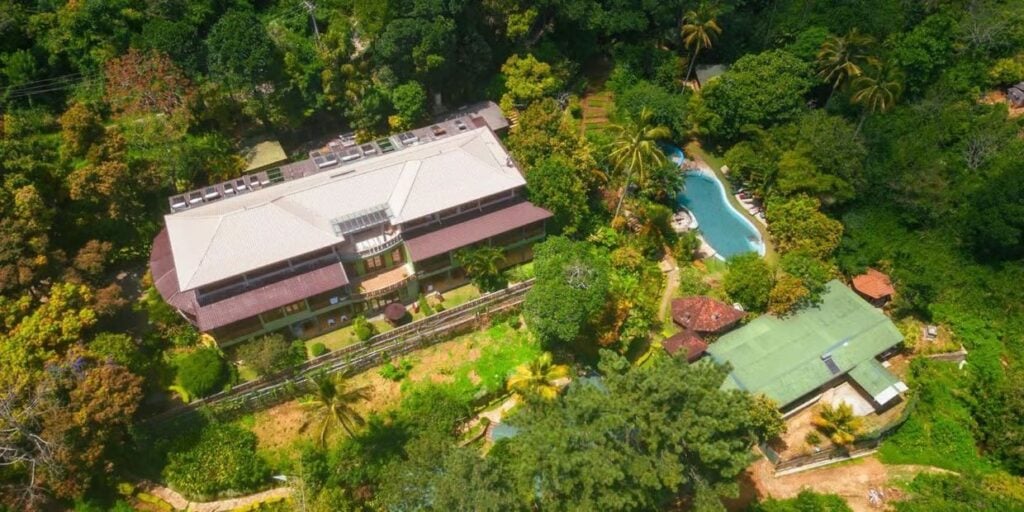
I’m writing this for guests staying in the hills above the city – at Yasmin Hill, that means the village of Moragolla in the Thalathuoya area. Distances and drive times are approximate and measured from central Kandy; entrance fees are taken from the official websites and are correct as of October 2026.
Things to do in Kandy and around: distances at a glance
On mountain roads, traffic, weather and road conditions decide how long a journey takes, so plan around the upper end of each range.
| Place | What’s there | Distance from Kandy | Time needed | Tip |
|---|---|---|---|---|
| Temple of the Tooth | sacred relic, royal palace (UNESCO) | city center | 1.5–2 hours | go for the morning ceremony |
| Kandy Lake and Udawattakele | lakeside walk, royal forest | city center | 1–3 hours | leeches in the forest after rain |
| Peradeniya | botanic gardens, orchids | about 6 km, 20–30 min | 2–3 hours | shady, ideal for a quiet day |
| Ceylon Tea Museum, Pekoe Trail | 1925 tea factory, trail stage 1 | about 3–4 km, 15–20 min | 1.5 hours; 4–5 hours with the hike | check the stage status first |
| Embekke and nearby temples | woodcarvings, 14th-century shrines | about 10–15 km, 30–45 min | half a day | combine with Peradeniya |
| Victoria and Randenigala dams | reservoirs among the hills | about 25–40 km, 1–1.5 hours | half a day | scenery without the crowds |
| Knuckles Range | misty ridges (UNESCO) | about 40–60 km, 1.5–2.5 hours | full day | go with a local guide |
| Pinnawala | elephant orphanage | about 40 km, 1–1.5 hours | half a day | elephant bathing morning and afternoon |
| Dambulla | cave temples (UNESCO) | about 72 km, 2–2.5 hours | one day, with Sigiriya | bring socks |
| Sigiriya | Lion Rock, frescoes (UNESCO) | about 90 km, 2.5–3 hours | full day | climb in the morning |
| Nuwara Eliya | tea estates, 1,868 m above sea level | about 75–80 km, 2.5–3.5 hours | 1–2 days | nights around 10–14 °C |
| Ella | Nine Arches Bridge, viewpoints | about 135–140 km, 4.5–6 hours | 2–3 days | check the train before you go |
Things to do in Kandy city
Let’s start in the city itself, the beating heart of the region. Kandy lies at around 500 meters above sea level and was the last capital of the Sinhalese kings until the British took it in 1815. UNESCO added the Sacred City of Kandy to the World Heritage List in 1988. The center is noisy and congested, so I always suggest arriving early in the morning.
Temple of the Sacred Tooth Relic (Sri Dalada Maligawa)
The island’s most sacred Buddhist site stands within the former royal palace complex and keeps the relic of the Buddha’s tooth in a casket in the inner shrine. You’ll feel the atmosphere best during one of the three daily ceremonies: 5:30–7:00 a.m., 9:30–11:00 a.m. and 6:30–8:00 p.m. Your ticket also covers the museums within the complex and is sold from machines inside the temple itself; tickets bought elsewhere are not valid. You leave your shoes at the shoe counter and pass a security check at the entrance.
My tip: Go to the Temple of the Tooth for the early ceremony, while the city is still calm. Pack a pair of socks and a light scarf for your shoulders – the paving gets hot in the sun, and a scarf always comes in handy at temples.
Kandy Lake and Udawattakele Forest
The lake was created between 1807 and 1812 by Sri Vikrama Rajasinha, the last king of Kandy. The shady path around it is about 3.2 kilometers long, and it suits days when your body needs calm more than adventure.
Above the temple begins Udawattakele, once the royal garden “above the palace”. The forest covers around 104 hectares, ornithologists have recorded about 80 bird species there, and the entrance is roughly a 15–20 minute walk from the temple. After rain, wear long trousers because of leeches.
Viewpoints, the white Buddha and Kandyan dance
From Bahirawakanda hill, crowned by a large white Buddha statue, you look out over the rooftops and the lake. In the evenings, the city stages performances of Kandyan dance and drumming, a tradition that comes from the royal court. It’s an easy, gentle evening out that doesn’t ask much of your energy.
Esala Perahera: the year’s greatest festival
In July or August (depending on the lunar calendar), processions fill the city for about ten nights. The lead elephant carries the sacred casket that symbolizes the tooth relic, surrounded by drummers, fire and whip dancers and dozens of decorated elephants. The festival ends with the Diya Kepeema water-cutting ceremony in the Mahaweli River. The city is packed at this time; staying in the quiet hills, you can come down for just one evening.
Day trips from Kandy
And now the part you may be most curious about: where to go for half a day or a whole day. I’ve listed the trips roughly in order of distance.
Royal Botanic Gardens, Peradeniya
The gardens lie 5.5 kilometers west of Kandy beside the Mahaweli River and grow more than 4,000 plant species across about 59 hectares. The highlight is the orchid house; nearby grows Grammatophyllum speciosum, which the garden authority describes as the world’s largest orchid. Beyond that, you’ll find palm avenues and huge old trees.
My tip: If you don’t know what to do with a free afternoon, go to Peradeniya. It’s close, shady and quiet, and after a slow walk among the orchids and palms you come back pleasantly tired rather than exhausted.
Ceylon Tea Museum and stage 1 of the Pekoe Trail
Three kilometers south of the city, in the Hanthana hills, the Ceylon Tea Museum occupies a tea factory built in 1925, with old machinery and a tea room on the top floor. If tea wins your heart, you can carry on with a cup in our newly opened circular tea house back at the resort.
The museum is also the starting point of the Pekoe Trail, a 300-kilometer, 22-stage walking route through the tea country of the island’s interior. Stage 1 to Galaha is 13 kilometers long with 537 meters of ascent, and the trail’s managers rate it as easy, taking around three hours. Check the current notices on the official website before you set off – some stages are temporarily closed during the rains.
Embekke and the Gampola-era temples
The Embekke Devalaya, dedicated to the deity Kataragama, dates from the reign of King Vikramabahu III (1357–1374). It is famous for its wooden pillars with 514 different carved motifs. The Gadaladeniya and Lankatilaka temples, from the same century, stand nearby, so you can make an easy half-day loop.
Victoria and Randenigala dams
The Victoria Dam on the Mahaweli River, completed in 1985, is the tallest in Sri Lanka at 122 meters. Nineteen kilometers downstream lies the Randenigala Dam (1986), whose reservoir covers 13.5 square kilometers. The road along the water runs through green, little-visited country – perfect when you want landscape without crowds or long walks.
Knuckles Mountain Range
Locally, the range is called Dumbara Kanduvetiya, the “mist-laden mountains”. Its highest peak, Gombaniya, reaches 1,906 meters, and since 2010 the Knuckles forest has been part of the UNESCO natural World Heritage Site of the Central Highlands of Sri Lanka. More than 34 percent of the island’s endemic trees, shrubs and herbs grow only here. Take a local guide and go in dry weather – the paths get slippery in the rain.
Pinnawala Elephant Orphanage
The orphanage near Kegalle was founded by the state in 1975. Today it is run by the Department of National Zoological Gardens, which says 65 elephants live there. It is liveliest when the elephants bathe in the Ma Oya river – according to the department, roughly 9:15–11:45 a.m. and 2:15–3:45 p.m.
There has long been a debate about the welfare of elephants kept in captivity, including at elephant orphanages. If you would rather see elephants in their natural habitat, consider Minneriya National Park in the Cultural Triangle. In the dry season, roughly May to September, hundreds of elephants can gather to feed around its reservoir.

Dambulla and Sigiriya in one day
Dambulla lies 72 kilometers north of Kandy. Its temple complex (UNESCO since 1991) has been a place of worship since the first century BC; its five caves hold 153 Buddha statues and about 2,100 square meters of murals.
Sigiriya is roughly 20 kilometers farther on. King Kassapa I ruled from this granite rock, about 180 meters high, between 477 and 495. What survives includes the famous frescoes, the Mirror Wall with verses scratched by visitors between the 8th and 10th centuries, the giant lion’s paws at the gate and the water gardens below the rock. You can also book your ticket in advance through the Central Cultural Fund’s online system.
Leave at dawn, climb the rock in the morning and visit Dambulla on the way back. Allow 10–12 hours on the road and on the steps, which is why I suggest saving this day until after your program.

Longer trips: Nuwara Eliya, Ella and the train through tea country
If you have two or three days left after your stay, head higher into the mountains. For me, the tea-covered slopes and cooler air are a magical way to end a journey.
Nuwara Eliya
Nuwara Eliya sits at 1,868 meters, is nicknamed “Little England” and is one of the island’s most important tea-growing areas. Days are around 20 °C (68 °F), nights 10–14 °C (50–57 °F). You can walk around Gregory Lake; Pidurutalagala, Sri Lanka’s highest mountain, rises above the town; and nearby lies the Horton Plains plateau, another part of the UNESCO World Heritage Site. It’s worth staying the night and setting off for Horton Plains early in the morning.
Ella
This mountain village at 1,041 meters is surrounded by tea estates. Favorite outings include the easy climb up Little Adam’s Peak (1,141 m), the walk to the Nine Arches railway bridge and the 25-meter Ravana Falls. Keen hikers head up Ella Rock. By road it’s more than 130 kilometers from Kandy, so allow two to three days.
Kandy to Ella train: status after Cyclone Ditwah (as of October 2026)
The Main Line from Colombo to Badulla is famous for its views of tea gardens, mountains and waterfalls; its highest station, Pattipola, sits at 1,898 meters. In normal times, the Kandy to Ella train takes roughly six to seven hours. But Cyclone Ditwah damaged the line in many places at the end of November 2025, and service has been coming back step by step, section by section:
- Ella: the Nanu Oya – Pattipola – Ella – Badulla section has been running again since 20 June 2026.
- Kandy: since 2 October 2026, trains from Colombo run as far as Peradeniya and Gampola, but not into Kandy itself – the Peradeniya–Kandy section stays closed until repairs to the Peradeniya bridge are finished (status checked on 13 October 2026).
- Between Gampola and Nanu Oya, repairs were still under way in October 2026 on the Gampola–Nawalapitiya and Hatton–Nanu Oya sections. Officials expect the whole Upcountry line to reopen by the end of 2026.
In practice, that means there is currently no through train from Kandy to Ella. The workable plan is to drive to Nanu Oya, near Nuwara Eliya, and take the train from there to Ella. That way you still ride the most beautiful stretch over Pattipola and Haputale. The situation is changing, so check the current service before you travel. And don’t lean or hang out of the train doors – the UK Foreign, Commonwealth & Development Office (FCDO) reports fatal accidents involving visitors doing exactly that.
How to combine day trips with an Ayurvedic stay or retreat
For me, this is the most important part of all. An Ayurvedic stay isn’t a sightseeing tour: a program has its own daily rhythm of treatments, consultations and rest. So the rule is simple. Plan the big trips before or after your program. Agree any shorter outings during the program with the resort’s Ayurvedic doctor – they know your treatment plan and will tell you which days suit a trip.
What fits during a program and what to save for later
- During the program (with your doctor’s agreement): the morning ceremony at the Temple of the Tooth, a slow walk around the lake or through Peradeniya, the Tea Museum without the hike, a short drive to the Victoria Dam.
- After the program: Sigiriya and Dambulla, Nuwara Eliya and Ella, hiking in the Knuckles or on the Pekoe Trail, and the Esala Perahera with its crowds and late-night return.
Practical rules for a day out during your stay
- Discuss the date of any trip with our Ayurvedic doctor in advance and agree which days suit you.
- Plan the trip so it doesn’t clash with your treatments and consultations.
- If your program includes a recommended diet, ask what to take with you for the road.
- Be back before dark – it gets dark roughly between 6 and 7 p.m., and the FCDO notes that road accidents are frequent, particularly at night.
My tip: Save the big excursions for the end of your stay, when your program is behind you and your mind is free for discovery. And before you head anywhere during the program, ask our Ayurvedic doctor – nobody knows your treatment plan better.
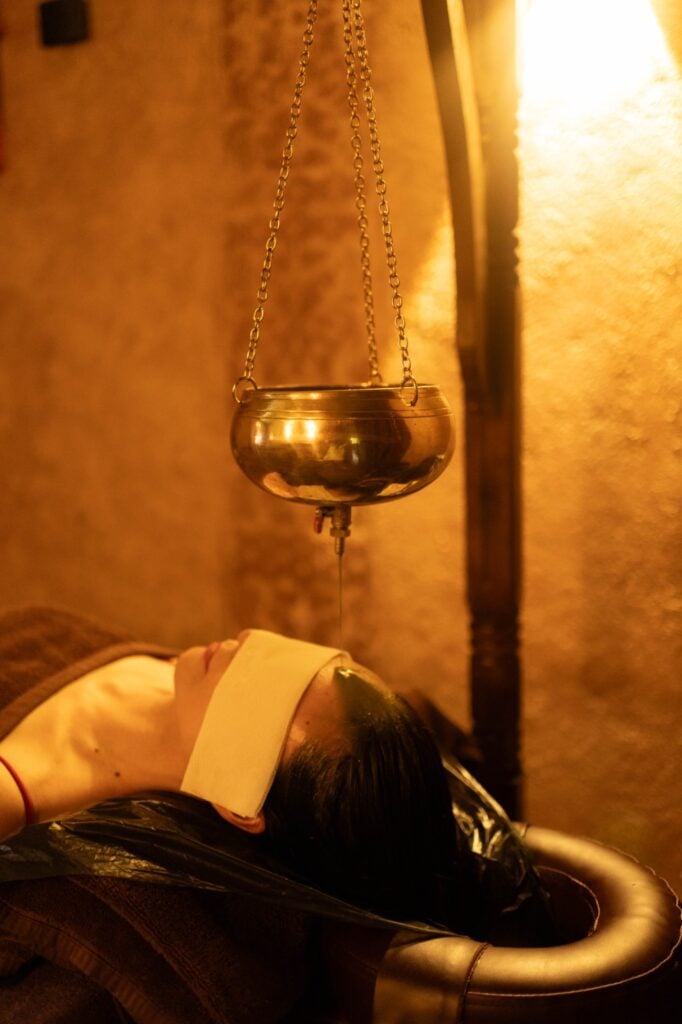
On days without a trip, there’s the pool, the gardens we harvest for our kitchen and the glass-walled Sati Hall with its view across the valley. You’ll find program lengths and prices on our page about Ayurveda in Sri Lanka at Yasmin Hill, and the rooms and facilities in the section on our resort in the hills above Kandy. If you’re still comparing options, our guide to choosing an Ayurvedic retreat in Sri Lanka and what it costs may help.
Ayurveda in the hills above Kandy
Individual programs from a 72-hour reset to a 21-day Panchakarma, with doctor consultations, treatments and meals. Bookable year-round – plan your day trips around them.
Three sample plans: fitting day trips around your stay
So you don’t have to start planning from scratch, I’ve put together three options depending on how long you’re staying.
7 days: an introduction to Panchakarma and two gentle outings
Alongside our Metabolic Kickstart (Intro to Panchakarma) – 7 days / 6 nights, from USD 1,284 (prices as of October 2026) – two short trips are plenty:
- Day 1: arrival, airport transfer (about 3–3.5 hours), rest.
- Day 2: if your treatment plan allows, the morning ceremony at the Temple of the Tooth and a walk around the lake.
- Days 3–6: treatments as planned by the doctor; on a lighter day, two hours at Peradeniya.
- Day 7: departure.
10–14 days: a specialized program and the Cultural Triangle
Our 10-day programs (from USD 1,926) or The Systemic Detox (Standard Panchakarma) over 14 days (from USD 2,600 in a shared room, prices as of October 2026) leave more room:
- During the program: Kandy, Peradeniya and the half-day Embekke loop, each in a different week.
- First day after the program: drive to Dambulla, visit the cave temples, stay the night near Sigiriya.
- Second day: climb Sigiriya as soon as it opens, then head to the airport.
After a retreat or longer program: three days in tea country
More than twenty retreats in the hills above Kandy take place at Yasmin Hill every year, and our February and March 2027 dates fall in Kandy’s driest season. Please note that all our 2026/2027 retreats are held in Czech; if you’d rather travel on your own dates, an individual Ayurvedic program works just as well. Either way, retreats and programs have their own rhythm, so plan longer journeys for afterwards:
- Day 1: drive through the tea estates to Nuwara Eliya.
- Day 2: train from Nanu Oya over Pattipola to Ella (check the service in advance), then Little Adam’s Peak at sunset.
- Day 3: Nine Arches Bridge in the morning, then on to the south coast or back to Colombo.
Not sure which stay suits you?
Compare our Ayurvedic programs and retreats by length, focus and dates, then plan your day trips around them.
Practical tips for day trips from Kandy
Getting around
The most comfortable option is a car with a driver who knows the mountain roads. In town, people get around by tuk-tuk, often booked through the PickMe and Uber apps. To drive yourself, you need an International Driving Permit (1949 convention) obtained before you travel, plus a Sri Lankan recognition permit; given the heavy traffic, though, I wouldn’t recommend it. If you get stuck with your planning, write to us at info@yasminhill.com – we’re happy to advise.
Entrance fees (approximate, as of October 2026)
| Site | Foreign adult | Opening hours | Note |
|---|---|---|---|
| Temple of the Tooth | LKR 3,000 (about USD 9) | 5:30 a.m.–8:00 p.m. | includes the museums in the complex |
| Peradeniya | LKR 3,540 (about USD 10.60) | 7:30 a.m.–6:00 p.m. | ticket office closes at 5:00 p.m. |
| Pinnawala | USD 17.70 | from 8:30 a.m. | ticket office closes at 5:00 p.m. |
| Sigiriya | USD 35 | – | half ticket USD 20; online booking available |
What to wear and how to behave at temples
- The Temple of the Tooth does not admit anyone in shorts, sleeveless tops or revealing clothing. Cover your shoulders and knees; suitable clothing is available at the entrances if you need it.
- Shoes come off, and the sun-baked paving gets hot – bring socks.
- Don’t pose for photos with your back to a Buddha statue. The FCDO warns that disrespecting Buddhist images is a serious offense in Sri Lanka.
- A visible tattoo of the Buddha can even lead to being refused entry to the country or deported, according to the FCDO.
When to go
Kandy is driest from January to March (around 80–90 mm of rain a month on long-term averages) and wettest in October and November (around 300 mm). You’ll find the details in our guide to the best time to visit Sri Lanka. In the rainy season, landslides can close roads, so keep a spare day in your plans.
Cyclone Ditwah hit the area around Moragolla at the end of November 2025, too. That’s why we run a relief initiative for our neighbors: Help Moragolla.
See you in the hills above Kandy
Kandy and its surroundings could keep you busy for weeks. But what I love most is the moment you return from a day out and climb back into the hills: the bustle of the city stays below, mist rises from the valley, eagles circle above the jungle and the scent of warm herbal oils drifts from the treatment rooms. I believe longevity doesn’t come from performance, but from harmony with nature, your mind and your inner rhythm – and that applies to travel, too. Explore, but leave time for stillness. I can’t wait to welcome you to Yasmin Hill!
Zlata Holušová, founder of Yasmin Hill
Frequently asked questions
Is Kandy really worth visiting?
Yes. Kandy is Sri Lanka’s cultural capital and a UNESCO World Heritage city, home to the Temple of the Sacred Tooth Relic, a lakeside walk and the Royal Botanic Gardens at Peradeniya. It is also a natural base in the center of the island: Sigiriya, Dambulla, the Knuckles Range and the tea country around Nuwara Eliya are all within a day’s reach. Plan on at least two days.
What to do in Kandy in 1 day?
Start with a ceremony at the Temple of the Tooth (5:30–7:00 a.m. or 9:30–11:00 a.m.), then walk the 3.2-kilometer path around Kandy Lake. In the afternoon, visit the Royal Botanic Gardens at Peradeniya, 5.5 km from the center, or the Ceylon Tea Museum in the Hanthana hills. End the day with a Kandyan dance performance. For the temple, wear clothes that cover your shoulders and knees.
Are 2 days enough for Kandy?
Two days cover the city well: the Temple of the Tooth, the lake and Udawattakele Forest on day one, Peradeniya and the Tea Museum on day two. If you also want day trips from Kandy – Sigiriya and Dambulla, the Knuckles Range or the Embekke temples – add a day for each. For a slower trip, stay a week and combine sightseeing with an Ayurvedic program in the hills.
Is the Kandy to Ella train running?
Not all the way, as of 13 October 2026. Cyclone Ditwah damaged the line in November 2025. The Nanu Oya – Ella – Badulla section has been running again since June 2026, but trains from Colombo stop at Peradeniya and Gampola, and the Gampola–Nanu Oya stretch is still being repaired. The practical option is to drive to Nanu Oya, near Nuwara Eliya, and take the train from there. Check the current service before you travel.
How far is Sigiriya from Kandy?
Sigiriya is about 90 km from Kandy by road, roughly 2.5–3 hours’ drive depending on traffic. Dambulla, with its UNESCO-listed cave temples, lies on the way, 72 km from Kandy, so you can combine both in one long day. Leave at dawn and climb the rock in the morning. Entry to Sigiriya costs USD 35 for an adult foreign visitor (approximate, as of October 2026).
What should I wear to the Temple of the Tooth?
Cover your shoulders and knees: the temple does not admit visitors in shorts, sleeveless tops or revealing clothing. You leave your shoes at the counter by the entrance and continue barefoot or in socks. A foreign visitor’s ticket costs LKR 3,000 (approximate, as of October 2026), includes the museums in the complex and is sold from machines inside the temple. Don’t pose with your back to a Buddha statue.
Can I combine day trips with Panchakarma?
Yes, with some planning. A Panchakarma program follows a fixed daily rhythm of treatments, consultations and rest, so long excursions such as Sigiriya or Ella are best planned before or after it. Short outings – the temple, the lake or Peradeniya – can often fit in during the program. Agree suitable days in advance with the resort’s Ayurvedic doctor; the same applies to any Ayurvedic program.
Sources
- UNESCO: Sacred City of Kandy
- UNESCO: Ancient City of Sigiriya
- UNESCO: Rangiri Dambulla Cave Temple
- UNESCO: Central Highlands of Sri Lanka
- Sri Dalada Maligawa: visitor rules and entrance fee and daily ceremony times
- Department of National Botanic Gardens: Royal Botanic Gardens, Peradeniya
- Department of National Zoological Gardens: Pinnawala Elephant Orphanage
- Central Cultural Fund: ticket prices for heritage sites (updated 10 October 2026)
- The Pekoe Trail: current stage status and Stage 1, Hanthana – Galaha
- GOV.UK (FCDO): Sri Lanka travel advice – Safety and security (checked 27 October 2026)
- Colombo Times (2 October 2026): train services to Peradeniya and Gampola resume; Peradeniya–Kandy awaits bridge repairs
- Ada Derana (2 October 2026): Podi Menike trial run reaches Peradeniya after Cyclone Ditwah disruption
- Ada Derana (20 June 2026): Nanu Oya – Badulla services resume; full line expected by the end of the year
- Sunday Times Sri Lanka (30 August 2026): adverse weather hinders reconstruction of the Upcountry railway
- Wikipedia: Kandy, Kandy Lake, Udawattakele, Esala Perahera, Ceylon Tea Museum, Peradeniya, Embekka Devalaya, Victoria Dam, Randenigala Dam, Knuckles Mountain Range, Pinnawala Elephant Orphanage, Minneriya National Park, Dambulla cave temple, Sigiriya, Nuwara Eliya, Ella, Main Line (Sri Lanka)
About the author

Don't want to miss any news?
Just subscribe to our newsletter and we will let you know any new retreat, offer or anything.
Related posts you might be interested in

New Year Retreat in Sri Lanka: Start the Year Warm, Clear and Grounded
Read more »Where to go for New Year somewhere warm? I compared 7 destinations by temperature,…

Best Time to Visit Sri Lanka: Month-by-Month Weather (incl. Kandy & Hill Country)
Read more »When is the best time to visit Sri Lanka? Month-by-month weather for the coasts,…

