For me, Ayurveda isn’t an item in a brochure. For more than twenty years I created one of Central Europe’s largest cultural festivals, and those years of intense work showed me the limits of modern life and chronic stress. Discovering Ayurveda and Buddhist meditation opened a new direction for me, and Yasmin Hill grew out of it. That’s why I love being asked how to choose an Ayurveda retreat in Sri Lanka and what it really costs – and I want to answer honestly, even if you end up going somewhere else.
In short: judge an Ayurveda retreat in Sri Lanka on three things – whether a registered Ayurvedic doctor examines you in person, whether the length matches your goal (a full Panchakarma takes roughly 14–21 days) and whether the price is itemized. At Yasmin Hill, a 7-day program starts at USD 1,284 and a 14-day Panchakarma at USD 2,600 (prices as of October 2026).
Below you’ll find how Sri Lanka compares with Kerala and with Ayurveda closer to home, a 12-point quality checklist, warning signs, a full cost breakdown including flights, what a day actually looks like and who shouldn’t go at all. If you simply want to know how our own stays work, start with our overview of Ayurveda in Sri Lanka at Yasmin Hill.
In this article
- Prices at a glance: an Ayurveda retreat for 7, 14 or 21 days
- Why Sri Lanka? How it compares with Kerala and Europe
- Wellness break, medical program or retreat? Three types of stay
- How long should you stay: 7, 14 or 21 days?
- What a good Ayurveda retreat must include: 12 points
- Warning signs: when to walk away from an offer
- How much does an Ayurveda retreat in Sri Lanka cost? A full breakdown
- What a day on an Ayurvedic program at Yasmin Hill looks like
- What science says about Ayurvedic stays
- Who an Ayurveda retreat is not for: safety and contraindications
- Before you book: 7 questions to ask the resort
- Summary: how to choose an Ayurveda retreat
- Sources
Prices at a glance: an Ayurveda retreat for 7, 14 or 21 days
Let me start with what you probably want to know first. The table shows the lowest prices for our programs at Yasmin Hill and a rough total including a return flight from the UK or continental Europe. The program price covers accommodation, meals, treatments and consultations with an Ayurvedic doctor; we can arrange a private airport transfer on request for a fee.
| Length | Yasmin Hill program (from) | Return flight from London or a major European hub | Approximate total |
|---|---|---|---|
| 7 days / 6 nights | USD 1,284 | approx. USD 700–1,200 | approx. USD 2,000–2,500 |
| 14 days / 13 nights | USD 2,600 | approx. USD 700–1,200 | approx. USD 3,300–3,800 |
| 21 days / 20 nights | USD 3,700 | approx. USD 700–1,200 | approx. USD 4,400–4,900 |
Why Sri Lanka? How it compares with Kerala and Europe
Search for “Ayurveda Sri Lanka” or simply “Ayurveda retreat” and you’ll find hundreds of offers, from Asian resorts to spa hotels in the Alps. The differences go far beyond price. They lie in who treats you, in what climate and for how long.
Sri Lanka: Ayurveda as part of the public health system
In Sri Lanka, Ayurveda isn’t a fringe alternative. It is overseen by the state Department of Ayurveda, which sits under the Ministry of Health and describes its role as promoting, regulating and protecting Ayurveda and traditional indigenous medicine. Teaching and research Ayurvedic hospitals also fall under its remit.
Ayurvedic doctors, pharmacists and nurses are registered with the Ayurveda Medical Council, which operates under the Ayurveda Act No. 31 of 1961. That gives you a practical advantage: you can ask any doctor about their registration. Alongside Ayurveda, the island also has its own indigenous healing tradition, deshiya chikitsa, which blends with Ayurveda in everyday practice.
Climate plays a part, too. Around Kandy, long-term averages put daytime highs at about 27–30 °C and night-time lows at about 18–20 °C all year round. Your body isn’t exposed to the cold, dry weather that Ayurveda considers aggravating for Vata. Sri Lanka is 5.5 hours ahead of the UK in winter and 4.5 hours ahead in summer, and 4.5 hours ahead of Central Europe in winter.
Kerala: wide choice, wide differences
The South Indian state of Kerala is perhaps the place most closely associated with Ayurveda, and it has a great many centers, from family clinics to large hotel complexes. A wide choice also means wide differences in quality, so an Ayurveda stay in India needs just as much checking as anywhere else.
In practical terms, India shares Sri Lanka’s time zone and you’ll usually fly there with a connection too. British travelers need a visa for India (an e-Visa is available), which you should arrange well before you travel, and most other European nationals need one as well.
Ayurveda in Europe and the UK: no long-haul flight, but a different climate
An Ayurveda stay closer to home saves you the flight and the jet lag. The downsides are a cold, damp climate for much of the year, imported oils and herbs and, above all, the fact that “Ayurveda retreat” often turns out to mean a long weekend with a few massages. That can be a lovely break, but it isn’t Panchakarma.
If you find a program near home that includes a qualified doctor and is long enough, it’s a perfectly sensible choice. Just ask the same searching questions you would in Asia.
| Sri Lanka | Kerala (India) | Europe and the UK | |
|---|---|---|---|
| Getting there from the UK or Europe | long-haul flight, then a transfer | long-haul flight, then a transfer | car, train or short flight |
| Time difference in winter (from the UK) | +5.5 hours | +5.5 hours | none or 1 hour |
| Entry for UK nationals | free ETA, apply in advance online | visa required (e-Visa available), apply in advance | no or minimal formalities |
| Climate in January | tropical warmth (around Kandy approx. 18–30 °C) | tropical warmth | winter |
| Status of Ayurveda | part of the public health system, doctors registered | part of the public health system | complementary therapy; check qualifications individually |
| Typical program length | 7–21 days | 7–21 days or longer | often a weekend to a week |
| What to watch for | doctor on site, itemized price | big differences in quality | whether it’s just massages |
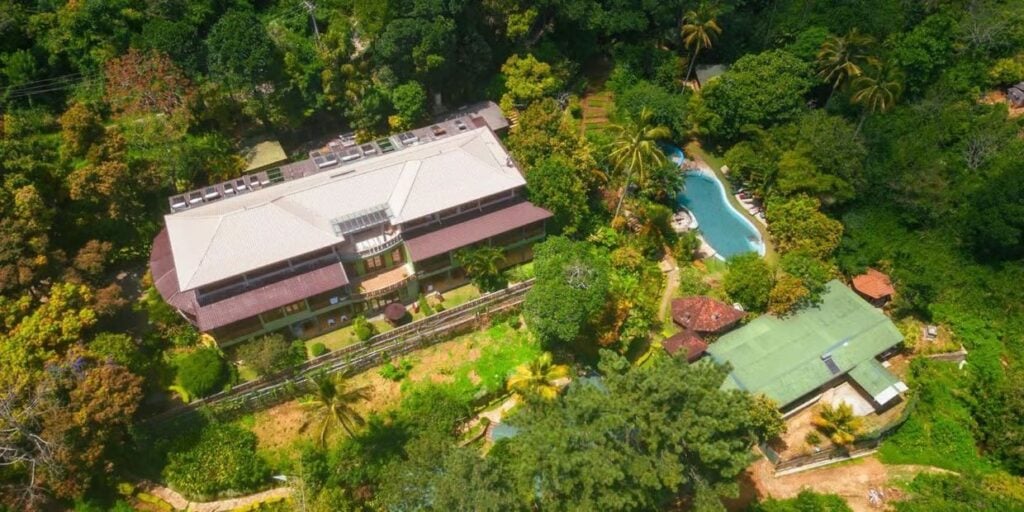
Now let me show you why my heart is here. Yasmin Hill sits in the hills above Kandy, in the village of Moragolla, between jungle and tea plantations. I love the mornings when the mist lifts from the valley and eagles circle overhead. We’re a small resort with around 12–13 rooms and suites, so my team really can give every guest their full attention.
Most of what we cook comes from our own permaculture garden and from local gardens. Alongside our Ayurvedic doctors and therapists, we also offer longevity technologies: IHHT oxygen therapy, BEMER, Vielight and an infrared sauna with red light. You can read how Ayurvedic care works here, step by step, on our page about Ayurveda at Yasmin Hill.
Wellness break, medical program or retreat? Three types of stay
The word “Ayurveda” now appears on very different kinds of offers. Before you compare prices, be clear which of these three types you’re looking for. Otherwise you’ll end up comparing a massage with a treatment program.
1. Relaxing Ayurveda without a doctor
A hotel or spa offers Ayurvedic massages, perhaps shirodhara too, but without an initial examination or an individual plan. This kind of stay is fine for rest and a first taste of the treatments. Don’t expect a cleanse or help with health problems from it, and don’t compare its price with a medical program.
2. An individual treatment program with a doctor
Your stay begins with a consultation with an Ayurvedic doctor, who draws up a plan of treatments, diet and, where appropriate, herbs based on your condition and goal. The doctor follows your progress and, at the end, recommends how to continue at home. This category includes Panchakarma, Ayurvedic detox stays and programs focused on a specific issue. Dates tend to be flexible because you aren’t tied to a group.
3. A group retreat with a teacher and Ayurvedic care
The program is led by a teacher (yoga, qigong, breathwork, coaching) and Ayurveda forms the framework: food, treatments and, on some retreats, a consultation with a doctor. The upside is community and a set program; the downside is fixed dates and less room for individual treatment. For every retreat, check how much Ayurvedic care is actually included in the price.
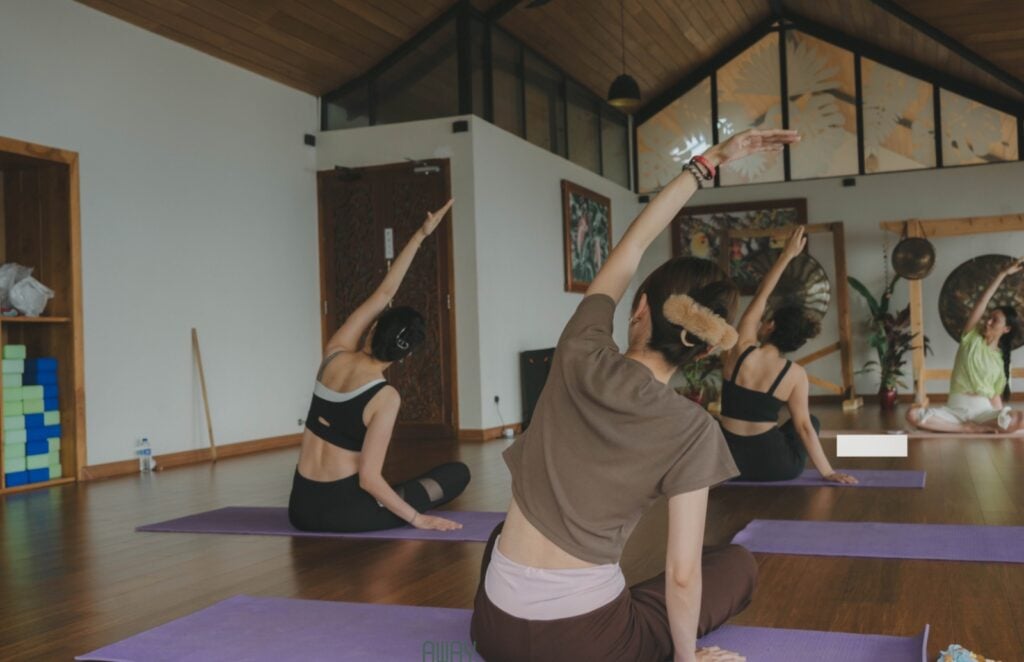
At Yasmin Hill you’ll find both the second and the third type, and I enjoy them equally. Our individual Ayurvedic programs are led by our Ayurvedic doctor, and more than twenty retreats with visiting teachers take place here every year. This season they include Awaken Your Inner Qi (Zhineng Qigong and Ayurveda with Master Liu Jianshe, 1–13 February 2027) and Leadership Recharge (1–14 March 2027), whose price also includes a consultation with an Ayurvedic doctor and daily therapies. Please note that this season’s retreats are held in Czech – if you don’t speak Czech, an individual program on dates you choose will suit you better.
How long should you stay: 7, 14 or 21 days?
To me, length is the most important question of all. It’s also where it’s easiest to cut corners in exactly the wrong place. Classical Panchakarma has three phases: preparation (internal and external oiling and warming), the cleansing procedures themselves and, finally, a gradual return to your usual diet and routine. Each phase needs its own time.
| Length | What you can usually fit in | Best for | At Yasmin Hill (from) |
|---|---|---|---|
| 7 days / 6 nights | an introductory cleanse and preparation, getting to know the routine and the food; not a full Panchakarma | a first experience, limited time | The Metabolic Kickstart (Intro to Panchakarma): USD 1,284 |
| 10 days / 9 nights | a program focused on one issue | a specific goal: liver, thyroid, inflammation, women’s and men’s vitality, nervous system | targeted programs: USD 1,926 |
| 14 days / 13 nights | a standard Panchakarma with all three phases | most people who want a real cleanse | The Systemic Detox (Standard Panchakarma): USD 2,600 |
| 21 days / 20 nights | a full Panchakarma followed by rasayana, the strengthening and rejuvenating phase | deeper, longer-term goals | The Ultimate Cellular Reset (Panchakarma): USD 3,700 |
If it’s your first time and you only have a week, the 7-day introduction to Panchakarma will show you how your body responds to an Ayurvedic routine. If you want a genuine cleanse, the sensible standard is the 14-day Panchakarma. Three weeks make sense when the goal is deeper renewal and the cleanse is followed by rasayana, as in our 21-day Ultimate Cellular Reset.
The final recommendation should always come from the doctor after your initial consultation – not from me, and not from a table. And don’t forget the journey: from London or most European airports the flight takes the best part of a day, and the drive from Colombo airport to the resort takes 3–3.5 hours. So add about two days to a week-long program.
We describe the individual phases and the five classical cleansing procedures in detail in our guide to Panchakarma.
What a good Ayurveda retreat must include: 12 points
This is the list I’d hand to any friend heading off for Ayurveda, wherever she was going. Use it for any offer – in Sri Lanka, India or Europe. The more boxes it ticks, the lower the risk that you pay for treatment and get a spa break.
- An initial consultation with a registered Ayurvedic doctor – in person and on site, not just an emailed questionnaire.
- A traditional examination – including pulse diagnosis (nadi pariksha) and a detailed conversation about digestion, sleep, diet, diagnoses and medication.
- An individual plan – treatments, diet and herbs put together for you, not the same package for everyone.
- A clear number and length of treatments – you should know in advance how many treatments you’ll have a day and how long they last.
- Therapeutic food – cooked for your constitution and the phase of your program, ideally from fresh local produce.
- Herbs and remedies of known composition – for every preparation you should know its name, ingredients and manufacturer.
- Regular check-ins and a final consultation – the doctor monitors how you respond, and at the end you get recommendations for home.
- A small number of guests – in a smaller resort, the doctor and therapists have more time for each person.
- No alcohol – a cleansing program and alcohol don’t belong together.
- Yoga, breathing and meditation – Ayurveda works with body and mind; calm and movement are part of the program, not an extra.
- Trained therapists – ask where and for how long they learned Ayurvedic treatments.
- A transparent price – a written breakdown of what’s included (accommodation, meals, treatments, consultations, herbs, transfer) and what you’ll pay extra.
I consider points 1, 3, 6 and 12 the bare minimum. If they’re missing, it isn’t a treatment stay, whatever the offer is called. Our programs include accommodation, meals, treatments and consultations with the resort’s Ayurvedic doctor; a private airport transfer can be arranged on request for a fee.
My tip: I give everyone the same advice: before you book anything, with us or anywhere else, ask for a written breakdown of what’s included and keep it. Then, once you arrive, you can focus on yourself rather than on the bill.
Not sure how long to stay?
Tell us what you hope to get from your stay and a little about your health. We’ll help you choose a program that makes sense for you.
Warning signs: when to walk away from an offer
I love Ayurveda, and that’s exactly why it saddens me when its name is stuck on just about anything. These are the signs that would make me stop and think:
- “Panchakarma” in three days. There isn’t even time for the preparation. A short stay can be lovely, but it shouldn’t carry that name.
- Promises of a cure. A serious doctor talks about support and individual responses, not guarantees.
- A doctor only by email, or not at all. Without an in-person examination on site, a cleansing program can’t be run safely.
- A price without a breakdown. A vague “all-inclusive” often means extra charges for treatments or herbs.
- Pills of unknown composition. I explain below why this matters.
- Pressure to buy expensive remedies to take home. Recommendations for home, yes; pressure to buy, no.
- Nobody asks about your health. If no one checks your diagnoses and medication, no one can watch for contraindications either.
Why to be wary of remedies of unknown composition
Some traditional Ayurvedic preparations come from a discipline called rasa shastra, which deliberately combines herbs with metals, minerals and gems. A 2008 study in JAMA analyzed 193 Ayurvedic products bought online and found lead, mercury or arsenic in 20.7% of them. Among rasa shastra products, the figure was 40.6%. All the products containing metals exceeded at least one standard for acceptable daily intake.
The US National Center for Complementary and Integrative Health (NCCIH) warns that some Ayurvedic preparations may contain toxic levels of lead, mercury or arsenic, and advises people with health problems to discuss their use with a doctor. The rule for you is simple: only take preparations whose name, ingredients and manufacturer you know, and don’t buy Ayurvedic medicines online without a doctor’s recommendation.
How much does an Ayurveda retreat in Sri Lanka cost? A full breakdown
I want to talk about money openly, because the program price is only part of what you’ll spend. To compare offers fairly, add up every item. Here’s an example for one person on our 14-day Panchakarma:
| Item | Approximate cost | Notes |
|---|---|---|
| The Systemic Detox program, 14 days / 13 nights | from USD 2,600 | shared room; accommodation, meals, treatments, doctor consultations |
| Private room supplement | +USD 650 | program in a private room from USD 3,250 |
| Return flight from London or a major European hub | approx. USD 700–1,200 | indicative economy fare, depending on dates, airline and connections |
| Airport–resort transfer | on request, for a fee | approx. 3–3.5 hours by car |
| ETA (entry authorization) | USD 0 | free for UK, US and many EU passport holders since 25 May 2026; apply online in advance |
| Travel insurance | depends on your insurer | medical cover abroad; consider cancellation cover too |
| Excursions | your choice | agree the timing with the doctor so it doesn’t disrupt the program |
| Extra treatments and therapies | according to the price list | only anything beyond the program; check in advance |
| Herbs to take home | check in advance | ask whether, and to what extent, they’re included |
| Tips and personal spending | voluntary | at your discretion |
| Approximate total | approx. USD 3,300–4,450 | from a shared room with a cheaper flight to a private room with a pricier one; excluding the airport transfer (charged separately), insurance and personal spending |
How this compares with the market
Prices for Ayurveda stays in Sri Lanka can differ several times over. What matters most is whether a doctor, with an initial and a final consultation, is genuinely included, how many treatments you get each day, which type of room you choose and when you travel. Cheaper offers often leave out the doctor or turn out to be relaxing massages only, while established centers with a doctor and a single room in high season cost considerably more.
Some resorts also charge more in the winter months. So always compare the same dates, the same room type and, above all, the same content: doctor, number of treatments, herbs and transfer. The same goes for a single Ayurvedic massage: prices vary widely between local clinics, hotel spas and medical centers, so ask for a written price list and check how long the treatment actually lasts. On a doctor-led program, daily treatments are part of the package.
Where it pays to save – and where it doesn’t
You can save on your travel dates and flight, on the room type, or by choosing a shorter program if what you mainly want is to get to know Ayurveda. I wouldn’t save on the doctor, on the length of a genuine cleanse or on the quality of the herbs. That’s where it’s decided whether your stay does what it’s meant to do.
My tip: I really recommend adding a day or two off work after you get home. After an Ayurvedic program it’s a shame to jump straight into a Monday meeting – your body and mind deserve a gentle landing.
Work out your stay
Choose the program length and type of stay that fit your goal and your budget.
What a day on an Ayurvedic program at Yasmin Hill looks like
This is my favorite part. Our Ayurvedic doctor sets each guest’s exact schedule individually, and it changes with the phase of the program. As a rough guide, though, a day on a treatment program looks like this:
- Early morning – waking with the sunrise and birdsong, a glass of warm water, then yoga, breathing exercises or meditation.
- Breakfast – light and warm, suited to your constitution and the phase of your program.
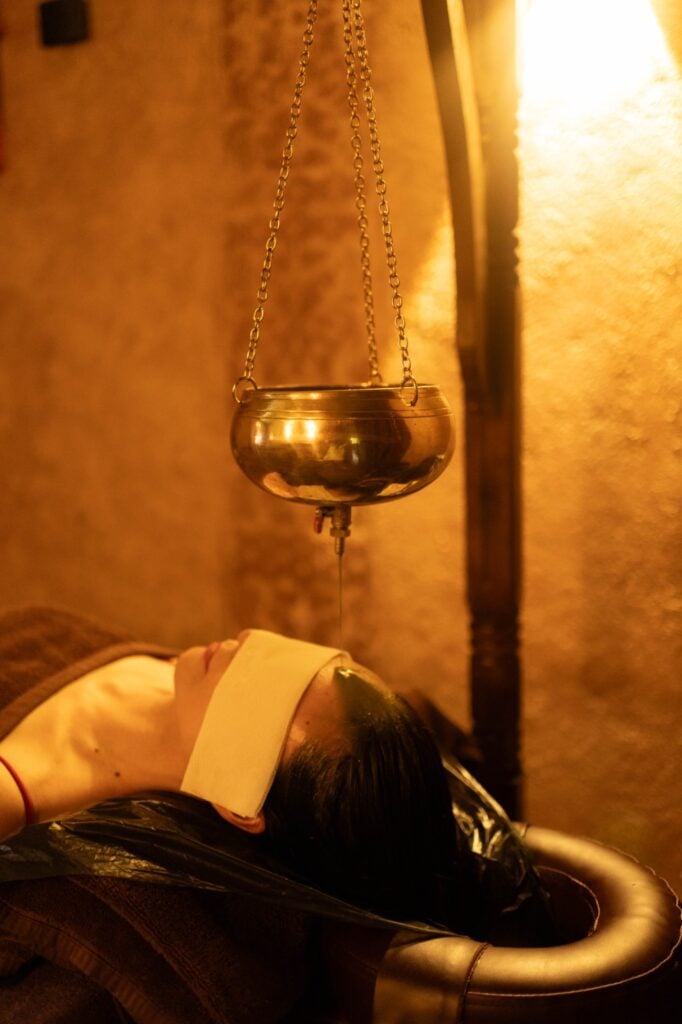
- Mid-morning – a short check-in with the doctor if needed, then the main block of treatments, such as abhyanga oil massage, a herbal steam bath or shirodhara.
- Midday – the main meal of the day. According to Ayurveda, the digestive fire (agni) is strongest around noon.
- Afternoon – rest, reading, a walk in the garden, perhaps another treatment.
- Early evening – gentle movement or meditation.
- Evening – a light, early dinner, a quiet evening without screens and an early night.
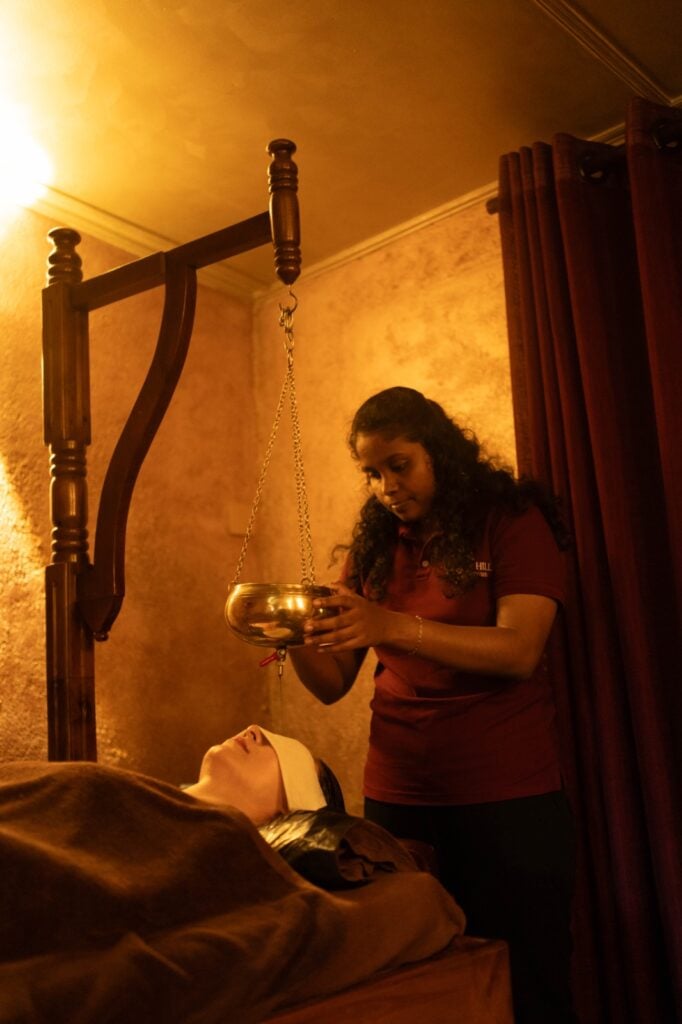
Here, this rhythm unfolds on a mountain rich in natural crystals, including rose quartz. Practice and meditation take place in the glass-fronted Sati Hall overlooking the hills, and in the afternoon you can sit in our new circular tea house or by the large pool. Kangen water is available to drink. You’ll find descriptions of the individual treatments in our overview of Ayurvedic treatments.
Whether and when to add the longevity technologies I mentioned earlier is something to discuss with the doctor. During an intensive cleanse, not everything is a good idea at once.
My tip: I’d pack light, comfortable clothes you won’t mind getting oil on, and a book rather than a laptop. Mornings in the hills can be fresh, so a light sweater comes in handy too.

What science says about Ayurvedic stays
Much as I love Ayurveda, I want to talk about health soberly and lean on the experts. Ayurveda is a traditional system with a long history, but high-quality clinical studies are still scarce. The World Health Organization’s global traditional medicine strategy for 2025–2034 likewise emphasizes building the evidence base, safety and regulation.
One of the larger and better-designed studies is a randomized trial from Germany (Kessler et al., 2018). A total of 151 patients with knee osteoarthritis received either complex Ayurvedic care or standard conservative treatment for 12 weeks (15 sessions in both groups). The Ayurveda group showed greater improvements in pain, stiffness and joint function, and the effect persisted at 6 and 12 months. The study wasn’t blinded, however, and the authors themselves say the size of the effect needs confirming in further research.
For Panchakarma itself the evidence is thinner. A small observational study (Conboy et al., 2009) followed 20 women on a five-day program. Their quality of life didn’t change significantly. The participants did, however, report healthier habits and more confidence in using Ayurveda for their health, and after three months fewer depressive symptoms. NCCIH sums up that some studies suggest benefits for osteoarthritis, but most are small or methodologically weak.
So the honest conclusion is this: an Ayurvedic stay may help you build healthier habits, support your mental well-being and, for some conditions such as knee osteoarthritis, bring relief. It doesn’t replace medical treatment, and its effects vary from person to person.
Who an Ayurveda retreat is not for: safety and contraindications
Most people can manage massages and a calm routine. The cleansing procedures of Panchakarma, however, put a load on the body, and so they come with contraindications. The classical Ayurvedic texts, for example, advise against virechana (therapeutic purgation) for pregnant women, children, older and weakened people, and patients with an acute fever or diarrhea. A cleansing program is usually not suitable if you:
- are pregnant or breastfeeding,
- have an acute infection or fever,
- have an untreated or unstable chronic condition, such as heart disease, high blood pressure or diabetes,
- are having cancer treatment – a stay only with your oncologist’s approval,
- have an eating disorder or are significantly underweight,
- take blood thinners or other medicines that may interact with herbs or a change in diet,
- are significantly weakened, for example after a recent illness.
This list isn’t complete, and it doesn’t mean an automatic “no”. A doctor may adapt or soften the program, or recommend gentle treatments only. That’s why you should tell the resort about your diagnoses and medication honestly in advance, and talk to your GP or specialist before you travel. Take your medicines with you and don’t stop them without your doctor’s agreement.
Before you book: 7 questions to ask the resort
- Who is the doctor, what qualifications do they have and where are they registered?
- How often will the doctor see me during my stay, and what does the initial examination involve?
- How many treatments will I have each day, and how long do they last?
- Which herbs or remedies will I take, and will I be told what’s in them?
- What happens if I need ordinary medical care during my stay? Where is the nearest hospital, and how would I get there?
- What exactly is included, and what will I pay extra for (room, transfer, herbs, excursions)?
- What recommendations will I get for home, and can I contact the doctor with questions after I return?
The answers should be quick, specific and straightforward. Please feel free to ask us these questions too – I’d be glad if you did. It’s also worth reading guest reviews, ideally the ones that describe how the program went, not just the room and the view.
Summary: how to choose an Ayurveda retreat
First, be clear whether you want relaxation, a treatment program or a retreat. For a genuine cleanse, allow 14 to 21 days. Insist on an in-person consultation with a registered doctor, herbs of known composition and an itemized price. And compare the total cost, including flights, not just the price per night. If you’d like to see the whole picture of how we work, our Ayurveda in Sri Lanka page brings it together in one place.
If you’re considering Yasmin Hill, these three programs cover the most common goals (prices as of October 2026):
- The Metabolic Kickstart – Intro to Panchakarma, 7 days, from USD 1,284
- The Systemic Detox – Standard Panchakarma, 14 days, from USD 2,600
- The Ultimate Cellular Reset – Panchakarma, 21 days, from USD 3,700
Choose your Ayurvedic program
Browse all our programs from 7 to 21 days and compare what each one includes.
Discovering Ayurveda showed me that vitality isn’t a question of performance but of balance. That’s exactly what I wish you with all my heart, whichever stay you choose. My motto is: “Longevity doesn’t come from performance. It comes from harmony with nature, the mind and your inner rhythm.” And if you come to find that harmony with us in the hills above Kandy, I’ll be so happy to welcome you!
Zlata Holušová, founder of Yasmin Hill
This article is for information only and is not a substitute for medical care. Ayurvedic practices can complement, but not replace, treatment prescribed by your doctor. Talk to your doctor before taking herbs or starting a detox program – especially if you are pregnant, breastfeeding, taking medication or living with a chronic condition.
Frequently asked questions
How much does an Ayurveda retreat in Sri Lanka cost?
It depends on the length and what is included. At Yasmin Hill, a 7-day introduction to Panchakarma starts at USD 1,284, the 14-day Panchakarma at USD 2,600 and the 21-day program at USD 3,700, all with accommodation, meals, treatments and doctor consultations (prices as of October 2026). Add a return flight, roughly USD 700–1,200 from London or a major European hub, travel insurance and a private airport transfer, available on request for a fee.
Is Sri Lanka good for Ayurveda?
Yes. In Sri Lanka, Ayurveda is part of the public health system: it is overseen by the Department of Ayurveda under the Ministry of Health, and practitioners are registered with the Ayurveda Medical Council under an Act of 1961. The island also has its own indigenous healing tradition, deshiya chikitsa, and a warm climate all year. Still, check each resort individually – above all the doctor, the program length and the itemized price.
What is the best Ayurveda retreat in Sri Lanka?
There is no single best retreat, only the one that fits your goal. Look for an in-person consultation with a registered Ayurvedic doctor, an individual treatment plan, a program long enough for what you want (around 14–21 days for a full Panchakarma), therapeutic food, a small, quiet setting and a written, itemized price. Then compare the total cost of your trip, including flights, rather than the price per night.
How much does an Ayurvedic massage cost in Sri Lanka?
Prices for a single treatment vary widely between local clinics, hotel spas and doctor-led centers, so ask for a written price list and check how long the treatment actually lasts. On a medical Ayurvedic program, daily treatments are normally part of the package. At Yasmin Hill, treatments, meals, accommodation and doctor consultations are all included in our programs, which start at USD 1,284 for seven days (prices as of October 2026).
How long should my first Ayurveda retreat be?
If you mainly want to get to know the Ayurvedic routine and treatments, seven days is enough to start with – but it is not a full Panchakarma. For a genuine cleanse, 14 days is the standard, allowing time for preparation, the main cleansing procedures and a gradual return to normal food. Add about two days for travel to a week-long program. The final length should be recommended by the doctor after your initial consultation.
Can I go on an Ayurveda retreat if I take medication?
Usually yes, but only after discussing it. Talk to your own doctor before you travel and tell the resort about all your medicines and diagnoses in advance. Particular care is needed with blood thinners, diabetes and blood pressure medication and drugs that affect the immune system, where herbs or a change in diet could interact. Bring your prescribed medicines with you and never stop taking them without your doctor’s agreement.
Do I need a visa for Sri Lanka?
Yes, you need an Electronic Travel Authorization (ETA), applied for in advance on the official eta.gov.lk portal. Since 25 May 2026 it has been free for tourists from 40 countries, including the UK, the US, Germany, France and the Netherlands; Ireland is not on the list. It is valid for 30 days with two entries, so even a 21-day program fits. Your passport must be valid for six months after arrival (as of 13 October 2026).
Sources
- Saper RB, Phillips RS, Sehgal A, et al. Lead, mercury, and arsenic in US- and Indian-manufactured Ayurvedic medicines sold via the Internet. JAMA. 2008;300(8):915–923. doi:10.1001/jama.300.8.915. PubMed 18728265
- Kessler CS, Dhiman KS, Kumar A, et al. Effectiveness of an Ayurveda treatment approach in knee osteoarthritis – a randomized controlled trial. Osteoarthritis and Cartilage. 2018;26(5):620–630. doi:10.1016/j.joca.2018.01.022. PubMed 29426006
- Conboy L, Edshteyn I, Garivaltis H. Ayurveda and Panchakarma: measuring the effects of a holistic health intervention. TheScientificWorldJournal. 2009;9:272–280. doi:10.1100/tsw.2009.35. PubMed 19412555
- National Center for Complementary and Integrative Health (NCCIH): Ayurvedic Medicine: In Depth
- World Health Organization (WHO): Global traditional medicine strategy 2025–2034
- Ayurveda Medical Council, Sri Lanka: Annual Report 2017 (Parliament of Sri Lanka; mission and functions of the council under the Ayurveda Act No. 31 of 1961)
- Department of Ayurveda, Ministry of Health, Sri Lanka: official description of the department (ayurveda.gov.lk, checked 13 October 2026)
- Charak Samhita Research, Training and Development Centre: Virechana – indications and contraindications
- GOV.UK, Foreign, Commonwealth & Development Office: Sri Lanka – entry requirements (checked 13 October 2026)
- Department of Immigration and Emigration, Sri Lanka: official ETA portal, including the list of countries eligible for a free tourist ETA from 25 May 2026 (checked 13 October 2026)
- GOV.UK, Foreign, Commonwealth & Development Office: India – entry requirements (checked 13 October 2026)
- Wikipedia: Kandy – Climate (long-term climate averages)
- Wikipedia: Sri Lankan traditional medicine
How we calculated prices: Yasmin Hill program prices come from the resort’s website and booking system (as of 13 October 2026). For the market comparison we reviewed the public price lists of around ten Ayurveda offers in Sri Lanka (resorts and booking portals) on 13 October 2026, per person and excluding flights. Flight fares are approximate: the lower end reflects economy fares advertised for London–Colombo in October 2026, the upper end is an estimate for busier dates.
About the author

Don't want to miss any news?
Just subscribe to our newsletter and we will let you know any new retreat, offer or anything.